See All

5 Best AI for Psychology Practices (Different Use Cases)
5 Best AI for Psychology Practices (Different Use Cases): 1. Psynth 2. BastionGPT 3. Sonde Health 4. Wysa 5. Aiberry
Author

Reviewed By
Share This
Artificial intelligence (AI) is changing every aspect of psychology. It's now being used to write therapy intake notes faster, summarize long reports, automate administrative tasks, track moods, and even draft treatment plans.
AI tools help many psychologists and other licensed mental health providers save time, reduce manual workload, and focus on patient care.
This article covers the five best AI tools used by psychologists in their clinical work. We'll also explain what you need to know before adopting any of them.
What Are AI Tools for Psychology?
AI tools for psychology refer to digital software that uses AI to help psychologists manage a part of their clinical work.
These platforms analyze data (speech, text, scores, or forms) and provide useful outputs like drafts, summaries, or trends. They fit under the larger space of AI in mental health, but they cater specifically to the needs of psychologists.
AI psychology tools are a broad category because the job of a psychologist covers many tasks, such as writing session notes, scheduling, symptom tracking, and conducting assessments.
Different AI tools focus on various areas of that work. Some write draft reports from test data, while others transcribe sessions and turn them into structured notes.
Many psychologists use a combination of these tools to support daily work and run their clinical practice smoothly.
5 Best AI Tools for Psychologists
Below are the best AI psychology tools for different use cases.
1. Psynth for Diagnostic Report Writing
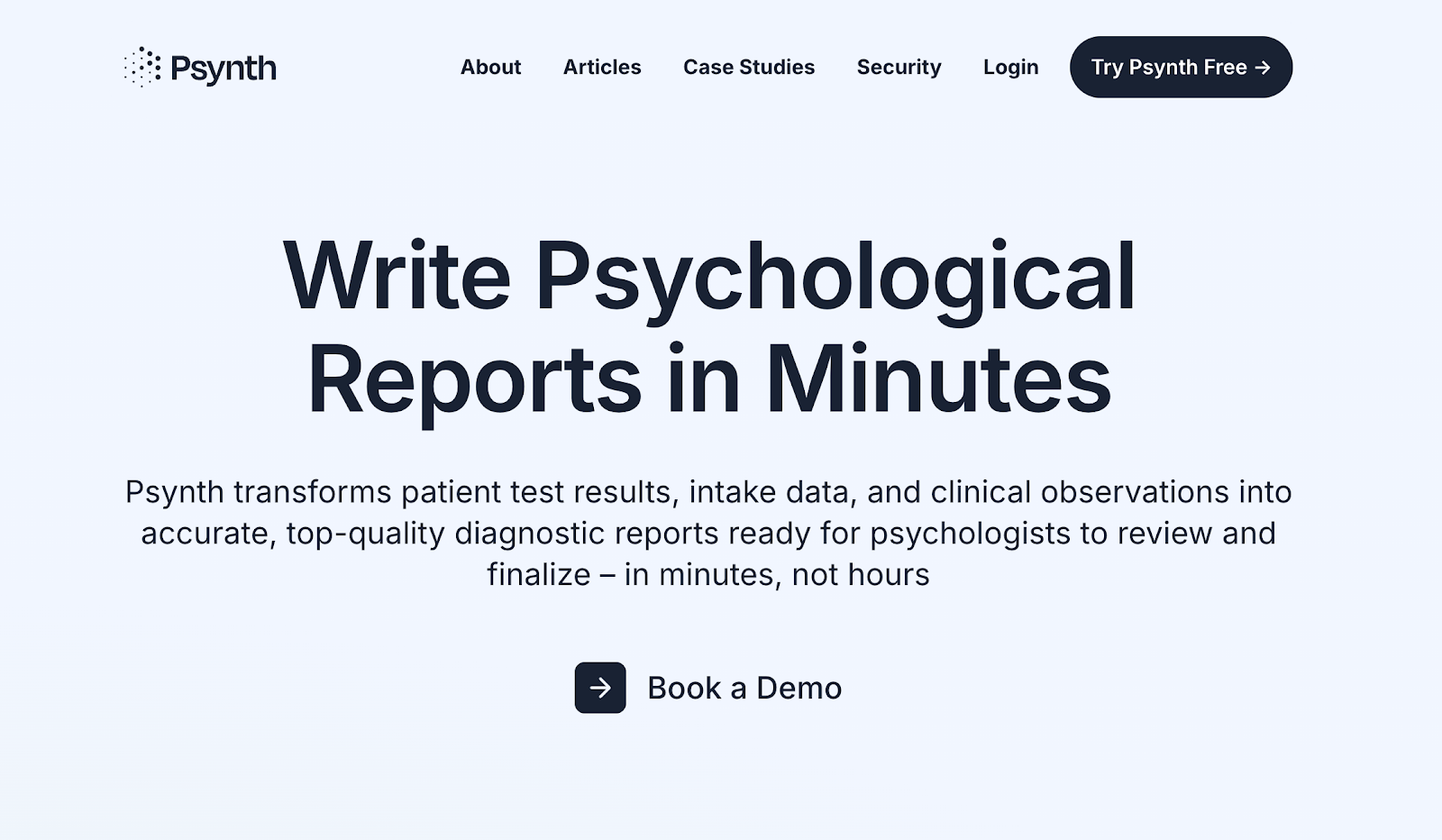
Do you spend several hours a day writing reports instead of patient care? Psynth helps reclaim your time by generating accurate and high-quality diagnostic reports in minutes.
All you need to do is upload clinical documentation as-is. Psynth uses AI to automatically translate all test results, intake data, and psychologist notes into structured drafts.
The platform follows best practices in psychological reporting. It's also built with input from expert psychologists and psychometrists to ensure PhD-smart reports.
Not happy with the final result? With Psynth, you can customize drafts to your liking. Use AI-assisted prompts or your own words to tailor reports to your voice, preferences, and clinical needs.
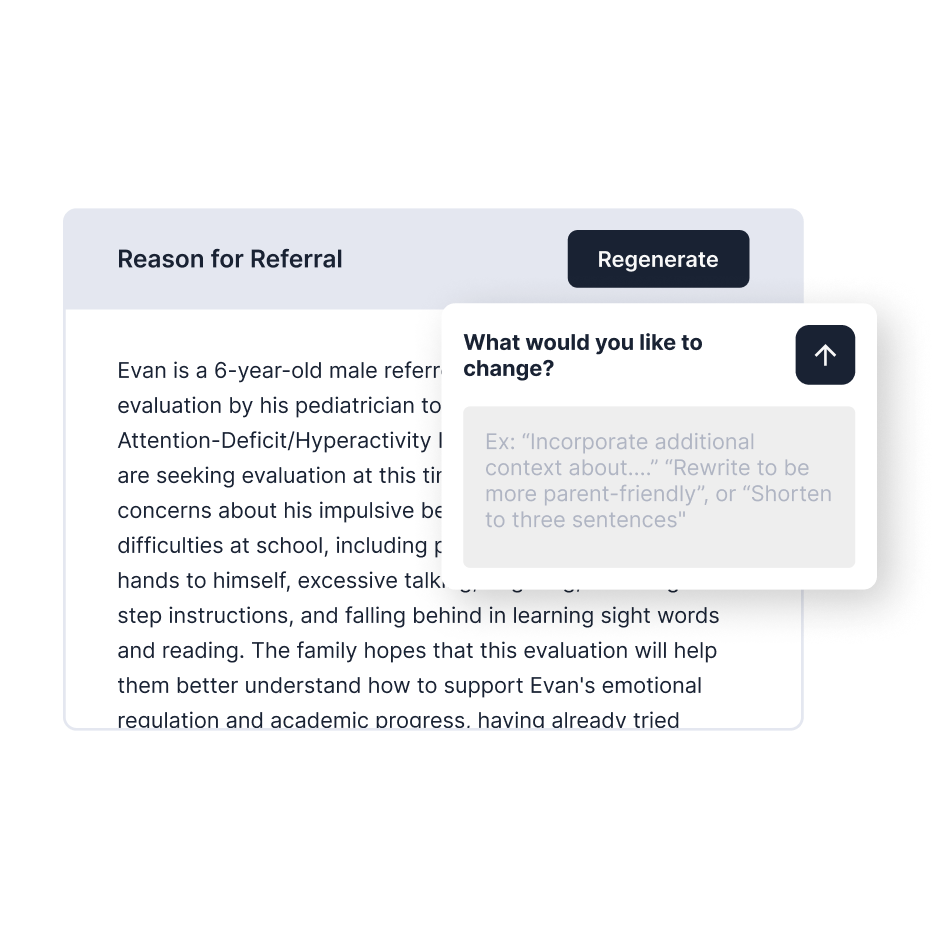
However, you remain in control of the final output. Psynth isn't designed to replace your work as a psychologist. Its AI tool simply handles the time-consuming parts of report writing, so you can focus on clinical analysis and patient care.
Try Psynth for free today to finalize psychological reports in minutes, not hours!
Key Features
- Instant PhD-smart reports: Generate high-quality diagnostic reports from raw data and assessment results in minutes instead of hours.
- Seamless data intake: Upload PDFs, images, and handwritten notes into Psynth without formatting required.
- Wide assessment compatibility: Psynth supports more than 370 psychological assessments to support your daily workflow.
- Built-in quality checks: The AI tool flags inconsistencies or missing data for your review.
- Custom tools: Tailor reports to your liking using your own words or the built-in AI assistant.
- Smart diagnosis: Receive evidence-based findings and clear explanations to support your clinical decisions.
- One-click export: Save reports as a Word file (.docx) without worrying about formatting issues.
- End-to-end HIPAA compliance: Psynth is a HIPAA-compliant AI tool. It encrypts all data and offers a signed business associate agreement (BAA) to secure protected health information (PHI).
- Zero-retention language model: Sensitive patient data is never stored, cached, or repurposed in the platform's large language models.
Request a demo of Psynth today to benefit from the power of AI without compromising data security!
2. BastionGPT for Clinical Transcription and Assistance
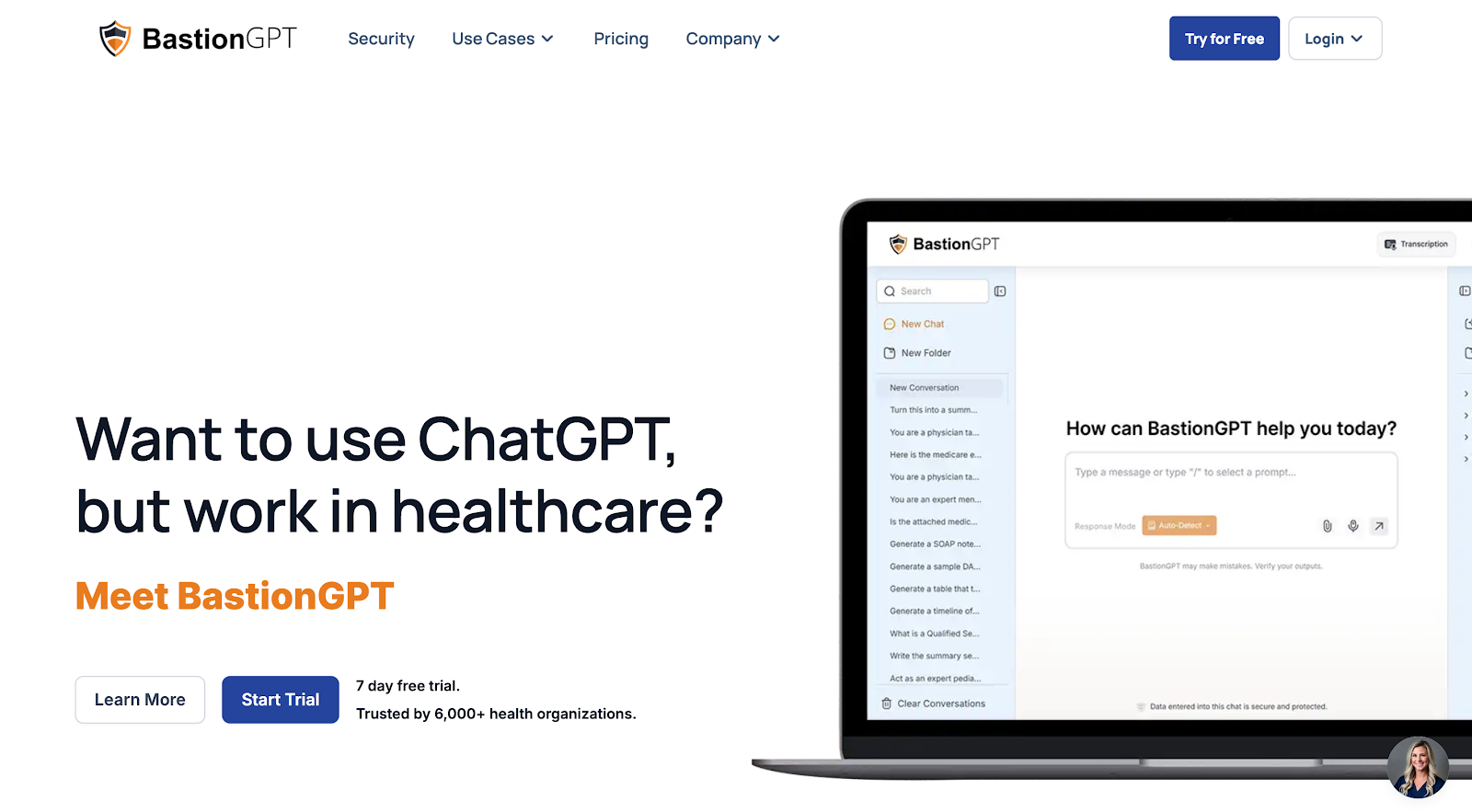
BastionGPT is a HIPAA-compliant alternative to ChatGPT. It's specifically designed for psychologists and mental healthcare professionals.
Unlike other generic AI-powered chatbots, BastionGPT prioritizes reputable healthcare resources to ensure scientific accuracy. It also allows adult health topics, such as violence and sexual abuse.
The platform acts as your all-around AI assistant. It can transcribe and summarize meetings by turning them into structured clinical notes in any format, such as SOAP, DAP, and BIRP.
BastionGPT also processes very large text inputs and generates concise overviews to save time. All you need to do is upload your document or copy and paste from your patient management system.
For treatment planning, BastionGPT can draft a first version based on your case details, including goals, target symptoms, and suggested interventions. You then edit and approve the plan before it goes into the record.
Key Features
- AI assistant: Summarize therapy sessions, develop individual treatment plans, generate follow-up emails, and convert large documents within seconds.
- Unlimited transcription: Translate session recordings into custom reports and draft notes that match your preferred formatting.
- Evidence-based intelligence: BastionGPT uses reputable healthcare resources to ensure scientific accuracy and avoid pseudoscience recommendations.
- Reduced content filtering: The platform does not block adult health topics, such as violence and sexual abuse.
- HIPAA and 42 CFR Part 2 compliance: BastionGPT is a private and compliant alternative to ChatGPT. It ensures that no data is used or sold to third-party companies.
3. Sonde Health for Mental Fitness Tracking
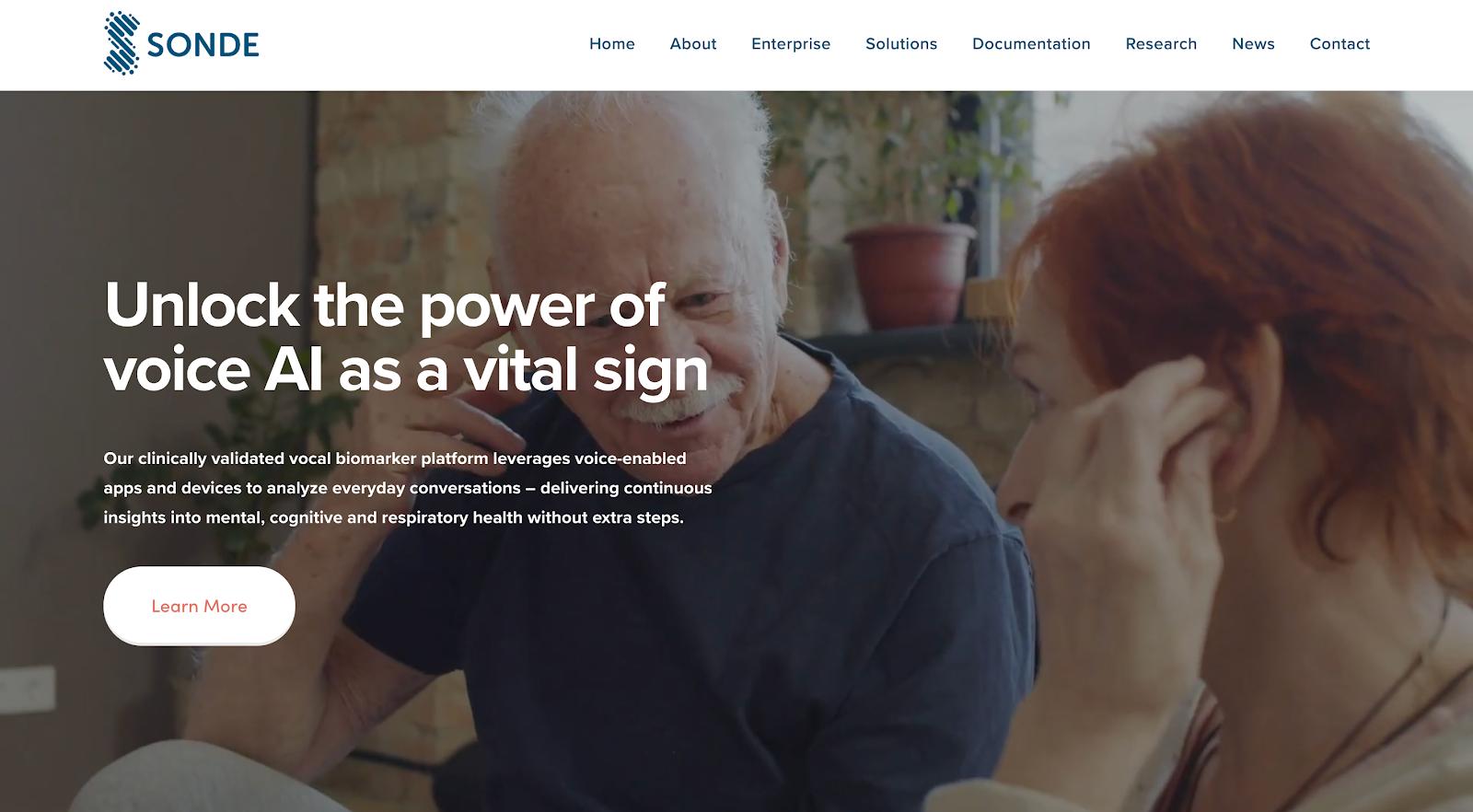
Sonde Health is a vocal biomarker platform that analyzes a client's voice to track their mental fitness. It uses advanced machine learning technology and medically-labeled voice samples to deliver actionable health insights.
The AI system studies the client's pitch, tone, rhythm, and other speech features that shift with mood and stress. Then, it produces a mental fitness (MF) score and a trend line you can review over time.
Sonde Health also includes an M3 Checklist assessment tool that checks for anxiety, depression, bipolar disorder, and post-traumatic stress disorder (PTSD).
For your psychology practice, this can add another data point between sessions. You can spot early changes linked to mental health issues, even when clients do not name them clearly yet.
Sonde Health is clinically validated and safe to use in the mental health field. It meets HIPAA regulations in addition to SOC Type 1 and Type 2 certification requirements.
Key Features
- Mental fitness tracking: Monitor changes in a client's voice, which reveal a lot about their current mental state.
- M3 Checklist assessment tool: Conduct this multi-condition assessment to measure symptoms for various treatable mental health issues.
- User verification: Confirm that voice samples come from enrolled and consented users.
- API/SDK connection: Integrate vocal biomarker analysis into your organization’s health initiatives seamlessly.
- Clinically-validated and HIPAA-compliant platform: Sonde’s voice scoring is backed by published clinical studies. The software also complies with HIPAA regulations to ensure data privacy and security.
4. Wysa for Mental Health Support and Crisis Escalation
Wysa enables psychologists to provide ongoing support to clients between therapy sessions. The app uses an AI chatbot that guides users through skills based on cognitive behavioral therapy (CBT), mindfulness, and other common therapy techniques.
Clients may check in any time, practice coping tools, and track how they feel, which helps improve engagement.
Psychologists can track progress, assign homework, and adjust care plans to match clinical goals.
With the growing popularity of chatbot therapy, Wysa stands out for safety. The platform monitors crisis language and distress signals in real time. When risk is high, it automatically prompts the user to contact emergency help. It also provides de-escalation tools and logs the event for your follow-up.
Key Features
- AI therapy bot: Provide 24/7 guided chats and coping exercises in between therapy sessions.
- Wysa Copilot: Assign homework, track progress, and communicate with clients from a single dashboard.
- Built-in crisis escalation: Wysa's AI tool detects crisis language and routes users to emergency help.
- Automated assessments: Conduct mood check-ins and psychosocial assessments to track patient progress and inform treatment plans.
- AI-guided care library: Access multiple evidence-based tools and exercises to support patients.
5. Aiberry for Assessments and Screening
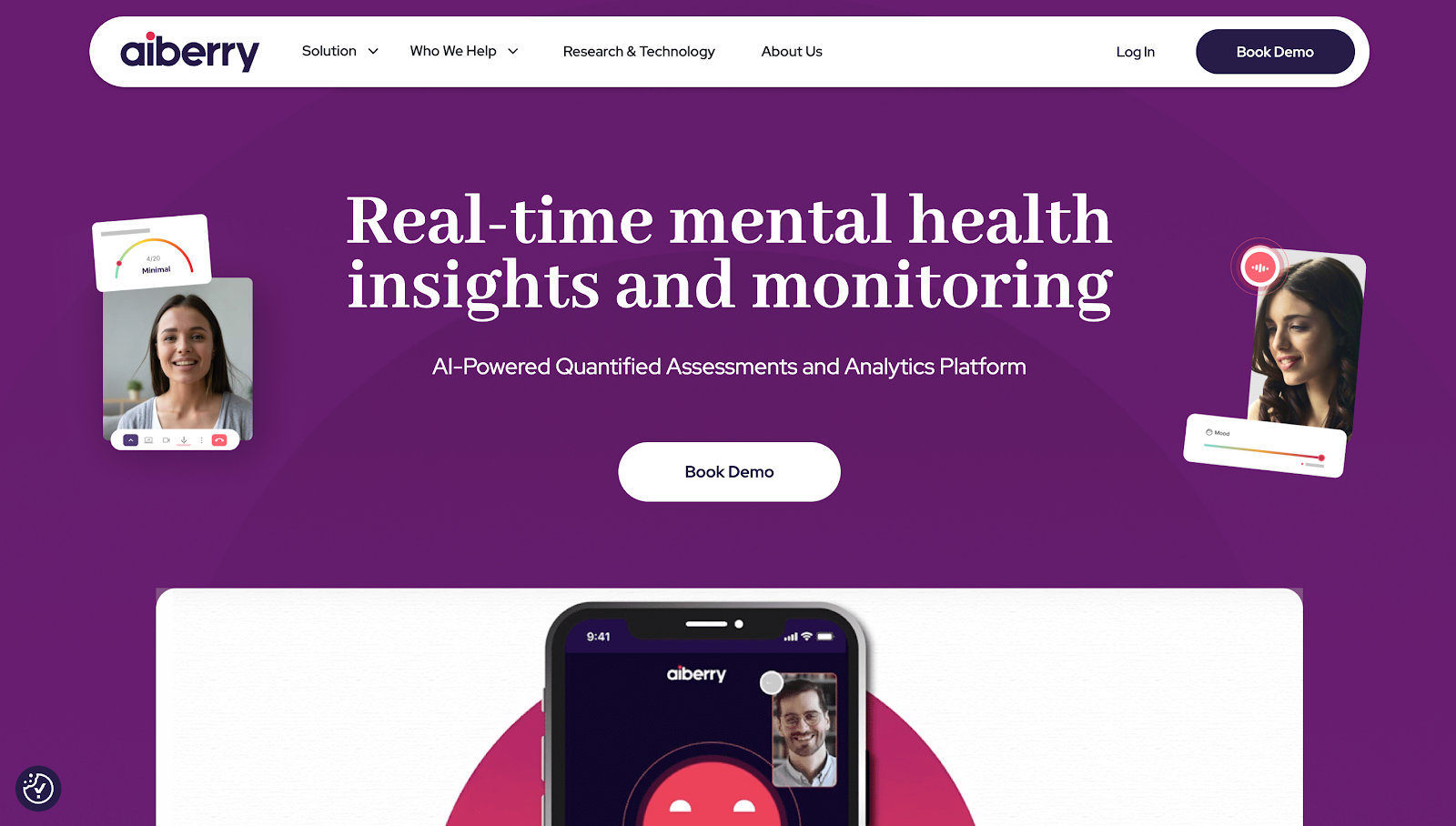
Aiberry is an assessment platform that uses the analytical power of AI to evaluate mental health disorders. It provides comprehensive screenings that detect anxiety, depression, alcohol abuse, eating disorders, and more.
Psychologists can conduct assessments in the clinic, via telehealth platforms, or send them to clients for self-screening. Users can complete it anonymously without signing up.
Aiberry breaks down the results and severity insights in real time. This helps psychologists and other behavioral health professionals tailor care programs that match demographics and symptoms.
The platform also includes an engagement toolkit that is ready to be shared with clients. It's an effective way to drive mental health awareness and participation.
Key Features
- Comprehensive mental health assessments: Conduct feelings-based screenings without requiring signups.
- Data analytics dashboard: Monitor utilization trends and severity insights, with the option to break down data by demographics, symptoms, and engagement.
- Engagement toolkit: Access ready-to-share templates for monthly emails, flyers, and social media announcements.
- AI-powered chat: Botberry uses a guided conversation style to help clients complete mental health self-screenings.
- Built-in telehealth platform: Support virtual patient meetings to ensure continued care outside of in-person sessions.
What You Should Know Before Using AI in Psychology
Even with the best tools and clear applications, AI poses challenges for mental health providers. Before adopting it into your work, keep the following points in mind:
AI Cannot Replace Psychologists
AI can support your work, but it cannot be the clinician. It doesn't sit with your client, notice subtle shifts, or build trust over time.
It also does not apply your lived training, cultural awareness, or real-time judgment.
While it's true that even neural networks were modeled after the human brain, this doesn't mean they think like you. AI only learns from past data and patterns.
You must still be the one who interprets results, weighs context, and makes the final call.
Accuracy Limitations
AI can be wrong, even when it sounds confident. It may miss key context, mix up details, or suggest a link that is not real. This matters most when you use AI for scoring help, report drafts, or screening summaries.
Treat every output as a first pass, not a final result. Your decision-making should guide what stays, what changes, and what gets removed.
Accuracy also depends on what you feed the generative AI tool. If your input is thin or unclear, the output will be too. Always double-check against primary data and your clinical measures.
Data Privacy Concerns
As a psychologist, you handle highly sensitive client information. That's why data privacy cannot be an afterthought.
Only use mental health technology tools that are clear about HIPAA support, encryption, and data retention policies.
You should also explain AI use to clients in ethical and appropriate ways, including what data is shared, why you use the tool, and how you protect it.
In psychology and mental health, trust and safety matter as much as speed. Avoid pasting names or full case details into a general chatbot. Do not forget to record the patient's consent.
Regulation and Scope-of-Practice Issues
Rules around AI use are still changing. Some states and systems may limit how AI can be used in patient care, note-taking, or screening.
You need to stay within your license scope and follow local board guidance.
Be extra cautious with client-facing bots. If the AI tool acts like a therapist or gives direct advice, it can create risk and confusion.
There are also serious concerns about harm with chatbot therapy, especially if a client relies on it during a crisis. Use AI that supports your workflow, not AI that replaces clinical work.
Psynth's AI Tool Writes Psychological Reports in Minutes
Psynth uses artificial intelligence to help you write reports faster and smarter. It automatically transforms patient test results, intake data, and clinical observations into high-quality diagnostic reports.
Instead of spending several hours compiling documents and writing drafts, you can finalize reports in less than 45 minutes. You can focus on clinical analysis and patient care instead of administrative work.
Every draft follows up-to-date best practices in psychological reporting. It also includes input from practicing psychologists and psychometrists to ensure accuracy.
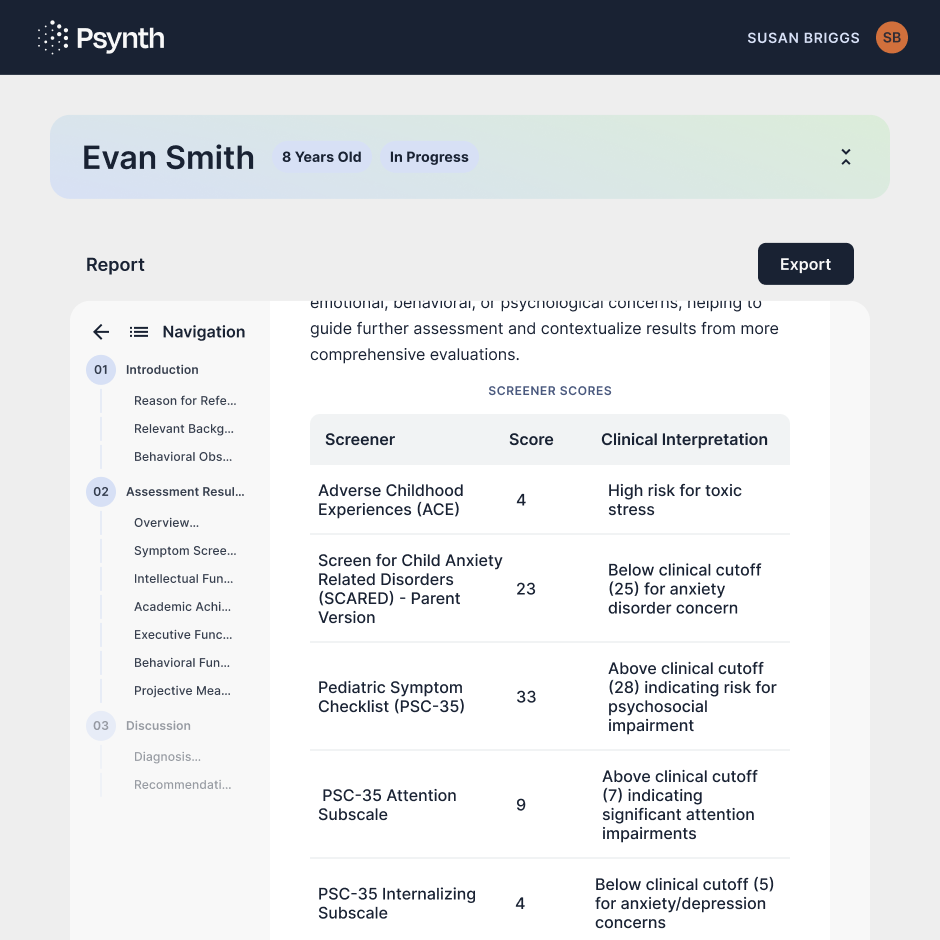
However, you retain full control over the final result. Use AI-assisted prompts or your own words to tailor the report to your personal preferences and clinical needs.
To ensure data security in AI-powered reports, Psynth uses encrypted AWS services that meet or exceed HIPAA security requirements. All AI inference is conducted using zero-retention language models.
A signed BAA guarantees the secure processing, storage, and transmission of sensitive data.
Plus, the platform is undergoing the SOC 2 Type 2 observation period soon. It’s also pursuing ISO 27001, PIPEDA, and GDPR certifications.
Psynth isn't meant to replace your work as a psychologist. Its AI tool simply generates high-quality reports, while you take care of the assessment and clinical analysis.
Try Psynth for free today to transform your reporting workflow!
Frequently Asked Questions
Is there any AI for psychology?
Yes, there are AI tools made for psychologists. Some platforms help write reports, while others transcribe sessions, track mood, or support mental health screening. These are productive uses for AI when you need to save time and stay focused on patient care. However, as a psychologist, you still review and approve all results.
Can you use AI as a psychologist?
You can use AI to summarize notes, draft reports, and monitor a client's progress faster, but you can’t let AI replace your work as a psychologist. Use AI as support, not as the provider.
What is the best AI for psychologists?
The best AI tool depends on your psychological work. Psynth is a strong pick for writing diagnostic reports. If you need session transcription and note drafts, BastionGPT helps.
What do psychologists think of AI?
Many psychologists are curious and cautious about AI use. They use these tools to save time, reduce paperwork, and help clients stay engaged. However, they also worry about accuracy, bias, and privacy. As the popularity of AI-powered tools grows, most clinicians want clear limits and solid safety rules.
See Psynth work in real time
We’ll demo an end-to-end report writing process and answer any questions along the way. (Yes, it’s so quick, we can get through it all during a single call.)