
See All

Psychosocial Assessment: Example, Tools, Methods
Explore a psychosocial assessment example, tools, and methods. See how Psynth can help you write psychological reports in less than 45 minutes!
Author

Reviewed By
Share This
Psychologists use a psychosocial assessment to understand a person's well-being and mental health before planning treatment.
It helps you see how a client’s background, history, current thoughts, feelings, and living situation shape their current needs.
A clear psychosocial assessment example helps you structure your notes, make accurate diagnoses, and develop personalized treatment plans.
This article covers the key parts of a psychosocial assessment, the tools you can use, examples, and the methods that help you gather important details during the first meeting.
What's in This Guide
What is a Psychosocial Assessment?
A psychosocial assessment evaluates an individual’s mental health, social life, and how well they are able to function in their daily life.
Instead of focusing solely on symptoms, you examine psychological factors (such as thoughts, feelings, and emotions) and social factors (including relationships, support systems, and life circumstances).
This way, you can better understand the client's mental health concerns and strengths, as well as the coping strategies they use. You can then create an effective treatment plan to address their psychosocial needs, often informed by standardized assessments and other clinical tools.
A psychosocial assessment is also worth distinguishing from a broader psychological assessment. A psychological assessment is the umbrella term for the full evaluation process — including testing, clinical interviews, and record review — while a psychosocial assessment specifically zeroes in on how a person's psychological state and social environment interact, without necessarily involving standardized psychometric testing.
A psychosocial assessment is often compared to a biopsychosocial assessment. The difference is that the former looks at psychological and social factors only.
A biopsychosocial assessment adds a third area by evaluating biological factors, such as physical health, genetics, and medical history.
Psynth is an AI-powered report-writing software that supports over 370 assessments. It automatically transforms raw assessment scores and test results into high-quality drafts. Try Psynth for free today to complete reports faster!
Key Components of a Psychosocial Assessment
Most psychosocial assessment templates typically include the following elements:
Presenting Problem and Reason for Referral
Ask the client why they seek treatment and professional help. Let them explain their concerns in their own words.
Note when the problem began and how it has changed over time. Ask what made them schedule the therapy session now. Then, examine how the issue affects daily life, work, and relationships.
Doing so helps you understand the client’s situation and gives you a starting point for treatment.
Psychological and Social Factors
Gather details about the client’s mood, thoughts, emotions, and current stress. Ask about mood changes, symptoms of mental health issues, and negative thought patterns.
You may also inquire about their family relationships, friendships, social roles, and how they spend time. Other social influences to consider include school or job status, employment history, spiritual beliefs, hobbies, and community involvement.
If possible, request a clear outline of what the patient wants to achieve through mental health services to guide your treatment plan.
Environmental Factors
Ask where the client lives, who they live with, and what their community looks like. Look at work conditions, school settings, transportation, and safety concerns. Note any recent changes, such as an address change, a job loss, or new responsibilities.
You should also explore access to food, housing instability, and basic resources.
All these outside pressures can influence the client's mental health condition and daily stress.
Family History
Explore the client’s relationship with parents, siblings, and extended family members. Ask about family problems that may affect their mental well-being.
Check if there's a family history of depression, trauma, addiction, or other concerns. Consider family beliefs around mental health and emotions.
You should also observe parent stress reactions that may shape the client's coping mechanisms.
Family structure and dynamics help you understand how early experiences influence the client’s current behavior.
Risk Factors
To evaluate risk, ask the client if they have thoughts of self-harm, past attempts, or plans to harm others. Allow them to describe any previous events in simple terms, including what happened, when it happened, and what led to it.
Look at access to sharp objects, medications, or firearms.
You should also ask about recent losses, sudden mood shifts, or changes in sleep or appetite. Check for trauma exposure, unsafe relationships, or high stress.
You can even request supporting details from other mental health professionals when appropriate.
Significant Life Events and Traumas
Significant events and past traumas can shape how a client thinks, reacts, and relates to others. When you explore this area, let the patient discuss moments that had a strong impact on their daily life.
These may include accidents, sudden losses, major health concerns, violence, or painful childhood experiences.
Ask when each event happened and how it changed their daily routines, relationships, or sense of safety.
This provides valuable insights for addressing root causes and treatment planning.
Substance Use and Addictive Behaviors
Check whether the client uses substances to cope with stress, anxiety symptoms, and other mental health issues.
If alcohol is part of their routine, ask about alcohol abuse, including how often they drink, how much they drink, and when drinking tends to happen.
Besides alcohol, take note of drug use, vaping, gambling, or other habits that may affect daily life. Then, evaluate their impact on work, sleep, relationships, or health.
Strengths and Resources
Identify what the client does well. What coping skills do they use to manage stress and other difficult emotions? Write down moments when the client has shown resilience.
You should also determine which resources are available to your patient. These may include family social support, friends, mentors, community services, and financial resources.
Make sure to build on these strengths to develop the most effective treatment plan tailored to the client's needs.
Diagnosis
Use the information you gathered to choose a diagnosis when appropriate. Take note of key symptoms that support your clinical decision.
Keep your diagnostic report writing factual and neutral. Only include details that relate to the client’s presenting concerns.
Treatment Plans
Outline the next steps in patient care. Set treatment goals with the client.
Select the appropriate interventions that match their specific needs. Then, include follow-up plans, referrals, and coping skills they can practice at home.
Psychosocial Assessment Example Template
Below is a sample psychosocial assessment template that you can use as inspiration:
Name: Jordan M.
Age: 26
Date of Assessment: November 18, 2025
Clinician: Dr. A. Lewis, PsyD
Presenting Problem and Reason for Referral:
Jordan reports ongoing stress, low motivation, and trouble focusing at work, which has already affected his job performance.
Psychological and Social Factors:
Jordan experiences mood swings, frequent worry, and frustration in social situations. He feels isolated from friends and avoids group activities.
Environmental Factors:
Jordan lives alone in a small apartment and reports financial strain after a recent rent increase. His job demands long hours and frequent deadlines. He also commutes for over an hour each day, which adds stress.
Psychiatric and Medical History:
Jordan reports a past diagnosis of generalized anxiety in college. He briefly saw a therapist two years ago but stopped due to scheduling issues. No hospitalizations and no current psychiatric medication.
Family History:
Jordan describes a distant relationship with their father and a supportive relationship with their mother. Family history includes depression in his uncle. No major medical conditions reported.
Risk Factors:
Jordan denies current thoughts of self-harm. He reports a history of passive thoughts during college, but had no attempts.
Substance Use and Addictive Behaviors:
Jordan drinks socially about once a week. No history of drug use, gambling, or other addictive behaviors.
Strengths and Resources:
Jordan describes himself as responsible, hard-working, and organized. He constantly talks to his mother and reports a close relationship with two friends from college. However, he has been isolating himself from them recently.
Diagnosis:
Provisional: Generalized Anxiety Disorder (F41.1)
Treatment Plans:
- Start weekly cognitive-behavioral therapy focused on worry patterns and stress reduction.
- Introduce relaxation techniques and structured scheduling to help with focus.
- Explore social engagement goals with the client to decrease isolation.

Psychosocial Assessment Tools
Psychologists use different psychosocial assessment tools to gather clear information and support strong clinical decisions.
Structured Interview Guides
Structured interview guides provide a set of prepared questions that keep your assessment organized and consistent. They help you collect the same type of information from every client, which makes your notes easier to compare and review.
These interview guides also reduce guesswork because the questions follow a standard format.
A popular example is the SCID-5, which helps you assess symptoms linked to psychiatric disorders included in the Diagnostic and Statistical Manual of Mental Disorders (DSM-5). It walks you through specific questions that match diagnostic criteria according to the American Psychiatric Association.
Another tool is the M.I.N.I., which stands for the Mini International Neuropsychiatric Interview. It offers a shorter diagnostic interview that you can use when you need quick but reliable diagnostic screening.
For general assessment, the Mental Status Examination (MSE) provides a simple way to observe the client's appearance, mood, speech, and thinking.
Psychosocial Assessment Documentation Tools
Beyond structured interviews and psychometric tests, AI-assisted documentation has become a modern addition to the psychosocial assessment toolkit. Platforms like Psynth take the raw material from your interview — clinical notes, intake data, and test scores — and turn it into a structured, well-organized draft, cutting down the time spent formatting and writing up findings. This frees you to spend more of the assessment process on synthesis and clinical judgment rather than transcription. For a closer look at how AI fits alongside other mental health documentation types — like progress notes, diagnostic reports, and treatment plans — see Psynth's full breakdown of documentation examples used by psychologists.
Standardized Psychometric Tests
Psychometric tests measure symptoms clearly and objectively. They help you see if the client improves or needs a change in treatment approach.
These tools also support your clinical impressions with data rather than guesswork.
Below are some popular examples of standardized psychometric tests:
- BDI-II (Beck Depression Inventory-II): It measures depression symptoms like sadness, fatigue, loss of interest, changes in sleep patterns, and suicidal thoughts. This helps you track severity across sessions.
- GAD-7 (Generalized Anxiety Disorder-7): Evaluate psychosocial symptoms related to generalized anxiety disorder, such as worry, restlessness, and tension.
- PHQ-9 (Patient Health Questionnaire-9): Assess depression severity, including interest, mood, and fatigue.
Risk Assessment Tools (C-SSRS, SIQ, SSI)
Risk assessment tools help you identify and address psychosocial risks before they cause the patient or others harm.
These tools guide you through direct questions so you can understand the client’s thoughts, intent, plans, and past actions. They also help you avoid vague language and ensure a thorough psychosocial assessment.
Here are a few examples of risk assessment tools:
- C-SSRS (Columbia-Suicide Severity Rating Scale): This screens the client's thoughts of self-harm and past attempts. It evaluates suicide risk so you can plan appropriate interventions and safety steps.
- SIQ (Suicidal Ideation Questionnaire): Assess the frequency and severity of self-harm thoughts for older adolescents (grades 10-12).
- SSI (Scale for Suicide Ideation): Measures the client's suicidal thoughts, intent, planning, and related thinking.
Functional and Behavioral Tools
Functional and behavioral tools show how a client manages everyday tasks, handles stress, and responds to triggers. They focus on the client’s actions rather than their emotions or thoughts.
These tools are used when a client assessment needs more detail about daily functioning, independence, or behavior patterns. They also help you recognize the client's symptoms, such as difficulty concentrating, low energy, or impulsive actions.
The WHODAS 2.0 is a popular assessment instrument that measures how well a patient handles daily activities. It evaluates six domains: self-care, getting along with others, cognition, mobility, life activities, and participation in society.
Some psychologists also use a functional behavioral assessment (FBA) to determine the reason behind challenging behaviors. For example, if a student always disrupts class, the assessment tool may reveal child problems and conditions, such as Attention-Deficit/Hyperactivity Disorder (ADHD).
Activities of daily living (ADL) checklists, sleep logs, or mood-behavior trackers also provide a comprehensive understanding of a person's emotional and social circumstances.
Genograms and Eco-Maps
Genograms map out a client’s family structure across several generations. These typically show marriages, divorces, patterns, trauma, and mental health history in a simple visual chart.
By using genograms, you can quickly identify repeating themes, such as depression, addiction, or trauma. You can then mark conflict, distance, or a strained relationship to better understand family dynamics.
On the other hand, eco-maps focus on the client’s connections outside the family. These draw links to school, work, friends, community groups, and daily stressors. They help you see whether each connection brings emotional support or pressure.
Both psychosocial assessment tools provide clear visuals that make patterns easier to explain and discuss during treatment.
Common Methods for Conducting Psychosocial Assessments
In addition to tools, psychologists use several methods to conduct assessments and collect important details from clients.
Clinical Interviews
Clinical interviews help you learn about the client’s concerns in a simple, conversational way.
Ask open questions that encourage patients to share at their own pace.
Start with the presenting problem, then explore medical history, daily routines, and current stress. Use follow-up questions to fill gaps and confirm facts.
Here are example questions you can ask:
- What brought you in today?
- When did this concern first start?
- How has this affected various aspects of your daily life?
- Who supports you when things get hard?
- What has helped in the past?
Keep your tone warm and steady so the client feels safe speaking openly. A structured interview provides the necessary context you may not get from psychosocial tests or forms.
Consider using mental health technology tools, such as ambient listening software, to transcribe clinical interviews and turn them into structured clinical notes.
Behavioral Observations
Behavioral observations give you information that the client may not express directly.
Watch how the client speaks, moves, and reacts. Pay close attention to eye contact, tone of voice, grooming, and overall behavior. Small details can show stress, sadness, worry, or overwhelm even when the client says they feel “fine.”
Objective observations help you compare what you see with what the client reports. They also guide your next steps and support clearer clinical judgment.
Collateral Information Gathering
Collateral information helps you confirm details when the client’s history is unclear or incomplete.
You can speak with family members, teachers, doctors, or social workers if you have consent. Ask specific questions about the client's behavior, routines, or past events. This helps you understand how the patient functions in different settings.
Collateral information can also reveal underlying medical issues, safety concerns, or long-standing patterns. This fills gaps and builds a more complete picture of the client's current condition.
Self-Report Questionnaires
Self-report questionnaires give the client a chance to share information in their own time. They work well when patients feel nervous speaking out loud or struggle to explain their thoughts clearly.
You can use these questionnaires before or after the session to support your clinical impressions. You'll also find it easier to track progress over time, especially for mood, anxiety, or behavior changes.
Combine self-report questionnaires with interviews and observations to create a more comprehensive and accurate assessment.
Psynth Supports Over 370 Assessments to Streamline Your Reporting Workflow
Psynth helps you complete psychologist reports in minutes, so you can spend your time on clinical, not clerical work.
The software supports over 370 (and counting) assessments to automate your reporting workflow. It uses AI technology to transform raw test scores, intake data, and clinical notes into a polished draft report.
Each draft is built on up-to-date best practices in psychological reporting. It also includes observations from expert psychologists and psychometrists to ensure high-quality results.
Need to tailor reports to your voice, preferences, and clinical needs? With Psynth, you can edit any section using AI-assisted prompts or your own words.
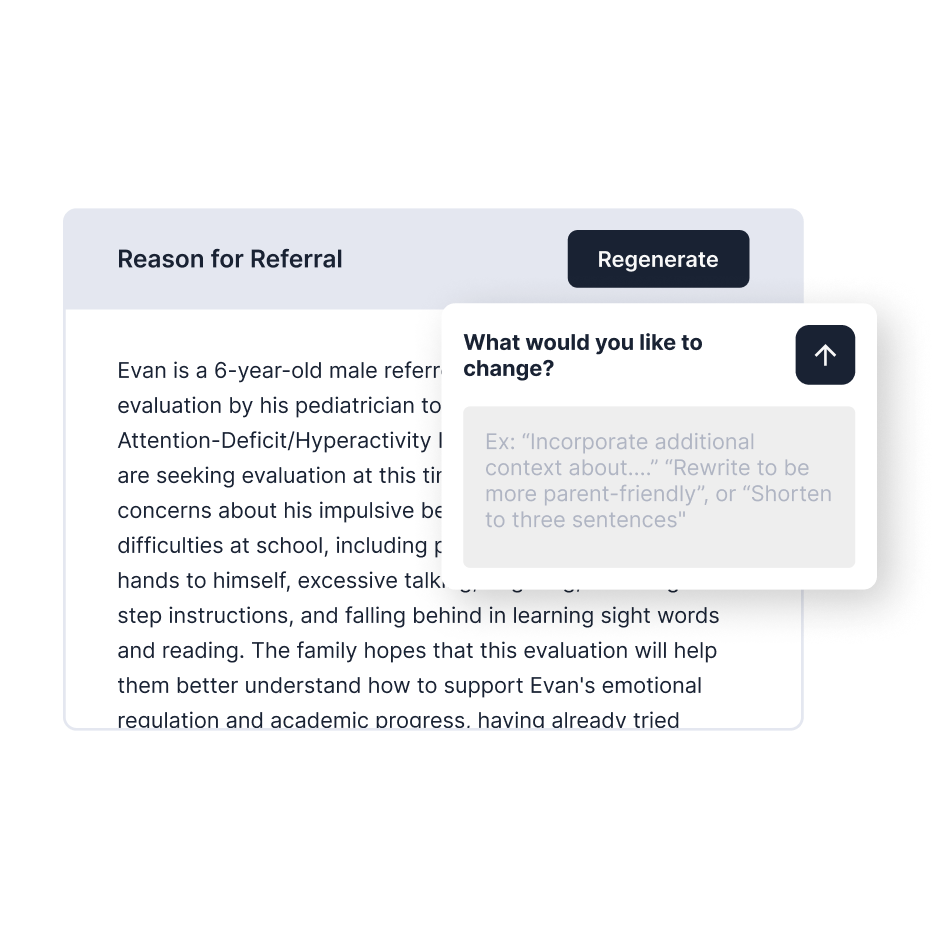
You can even run automated control checks to ensure data accuracy. Plus, you receive evidence-based findings and clear explanations that help support your clinical judgment.
Psynth's software is built for psychologists who want to spend more time on clinical analysis and patient care instead of administrative tasks.
It's not designed to replace the assessment process. It simply helps you write reports faster and with less effort, so you can reclaim your valuable time.
In fact, ever since adopting Psynth, Coast Psychology has cut reporting time in half and transformed a once-dreaded workflow. As Dr. Morizio puts it, "I spend far less time on tedious tasks, and more time on clinical synthesis."
On top of these benefits, Psynth is a fully HIPAA-compliant AI tool. The platform takes data security seriously by using encrypted AWS services and zero-retention language models. No data is sold, stored, or repurposed.
Signed business associate agreements (BAAs) also guarantee the secure processing, storage, and transmission of sensitive health information.
Try Psynth for free today and complete reports in less than 45 minutes!
Frequently Asked Questions
What is included in a psychosocial assessment?
A psychosocial assessment includes the presenting problem, reason for referral, psychosocial history, family background, social details, environmental factors, and risk concerns. You also explore strengths, coping strategies, and support systems.
What is an example of a psychological assessment?
A psychological assessment may include interviews, symptom rating scales, and cognitive or emotional tests. For example, a psychologist might use the PHQ-9, a clinical interview, and a mental status exam to understand the client's mood changes and daily functioning.
What are some examples of psychosocial?
Psychosocial examples include family conflict, job stress, financial problems, social isolation, cultural influences, and community pressures. These factors show how a client’s social and environmental factors shape their daily functioning.
How to document a psychosocial assessment?
Write clear and structured notes that cover the client’s presenting concerns, history, environment, risks, support systems, and strengths. Include observations, key quotes, and relevant details only. Consider using AI-powered software like Psynth to turn clinical notes into high-quality reports in minutes.
What is the difference between a psychosocial and a biopsychosocial assessment?
A psychosocial assessment looks at psychological and social factors only — things like a client's mood, thoughts, relationships, and living situation. A biopsychosocial assessment adds a third area by evaluating biological factors, such as physical health, genetics, and medical history, giving a more complete picture of how physical, psychological, and social factors interact
Who conducts a psychosocial assessment?
Psychosocial assessments are typically conducted by licensed mental health professionals — psychologists, clinical social workers, licensed counselors, or psychiatric nurses — during an intake or initial evaluation. The clinician usually gathers information through a structured or semi-structured conversation with the client, sometimes supplemented by collateral information from family members, teachers, or other providers when relevant and with consent.
How long does a psychosocial assessment take?
This varies by setting, but a standard psychosocial assessment typically takes 45–90 minutes for the initial interview, though complex cases (e.g., involving trauma, substance use, or multiple risk factors) may require additional sessions. This is separate from the time it takes to write up the findings — a task that traditionally adds several more hours, which is part of why report-writing tools have become popular among clinicians.
Should a psychosocial assessment always include a diagnosis?
Not necessarily. A diagnosis should be included "when appropriate" based on the information gathered, and clinicians are encouraged to keep the writing factual and neutral, including only details tied to the client's presenting concerns. In many cases — especially early in treatment, in school settings, or when more information is needed — a psychosocial assessment may conclude with clinical impressions or a provisional diagnosis rather than a definitive one.
How often should a psychosocial assessment be updated?
There's no single fixed interval — it depends on the setting and the client's needs. Common practice is to update or re-assess when there's a significant change in the client's circumstances or symptoms, at treatment plan review points (often every 3–6 months in outpatient settings), when transitioning between levels of care, or annually as part of routine treatment review. Agencies and insurers often set their own required intervals.
Can a psychosocial assessment be used in schools or workplaces?
Yes. In schools, psychosocial information often feeds into broader evaluations — for example, a functional behavioral assessment used to understand a student's disruptive behavior may draw on similar psychosocial domains (family, environment, functioning). In workplaces, psychosocial assessments can inform accommodations, employee assistance programs, or fitness-for-duty evaluations. The scope and formality typically differ from a clinical/treatment-planning assessment, and confidentiality and consent requirements vary by setting.
See Psynth work in real time
We’ll demo an end-to-end report writing process and answer any questions along the way. (Yes, it’s so quick, we can get through it all during a single call.)