
See All

8 Types of Therapy Intake Notes
Explore 8 types of therapy intake notes and learn how to write them. See how Psynth makes it simple to spend your time on clinical work, not clerical work!
Author

Reviewed By
Share This
Writing clear and structured therapy intake notes is one of the most important parts of your work as a psychologist. These notes serve as the foundation for treatment, guide your first sessions, and help you gain a better understanding of your clients.
However, intake notes can look different depending on the type of therapy you practice. For example, a CBT intake will not focus on the same details as a psychodynamic or trauma-focused intake document.
In this guide, you’ll learn about eight types of therapy intake notes, what makes each one different, and how to write them with confidence. But first, let's define therapy intake notes.
What Are Therapy Intake Notes?
Therapy intake notes are written records you create after a client’s first intake session. These notes provide a clear summary of why the patient is seeking therapy, what they are dealing with, and what you learned during the initial meeting.
They help you organize the client’s story, document your observations, and establish treatment goals.
Therapy intake notes differ from progress notes, which document the client’s ongoing treatment and response to therapy over time.
Intake documentation is also distinct from process notes, which include your private thoughts and personal impressions that aren't part of the official client record.
Intake notes focus on facts, history, and early clinical impressions to set the direction for future sessions.
8 Different Types of Therapy Intake Notes
There are many ways to write therapy intake notes, and each style depends on the type of therapy you provide. Below are eight common types you may use in your psychology work.
1. Cognitive Behavioral Therapy (CBT) Intake Notes
CBT intake notes focus on the links between thoughts, emotions, and actions. The goal is to capture patterns that shape the client’s daily mental health struggles.
The CBT intake process targets current issues rather than previous therapy experiences.
As a psychologist, you record what the client thinks, how they react, and what keeps their symptoms going. You also look for cycles that repeat, such as avoidance, negative predictions, or rigid thinking.
When writing CBT intake notes, keep the structure simple. Start with the presenting problem. Record the client’s thoughts linked to the concern. Then, take note of emotions and actions that follow those thoughts.
Add your early ideas about cognitive distortions or behavior patterns. Close the note with short-term goals and the first steps you plan to use in treatment.
2. Dialectical Behavior Therapy (DBT) Intake Notes
DBT intake notes consider emotion patterns, coping limits, and safety risks. These notes help you understand how the client handles stress, how fast emotions shift, and which skills they already use.
DBT intake notes stand out because they center on emotion swings, skill use, and risk factors. You pay close attention to behaviors linked to pain, conflict, or loss of control. You also track how the client reacts in close relationships.
To write effective DBT intake notes, determine the main problem the client wants help with. Record situations that lead to intense emotions before listing the coping skills the patient has tried.
Note any self-harm, urges, or unsafe actions. Then, describe the client’s triggers and the speed of mood changes.
You can include which DBT skill groups may help, such as emotion control or distress tolerance. Keep the note direct, simple, and focused on steps the patient can take right away.
3. Psychodynamic Therapy Intake Notes
Psychodynamic intake notes focus on past experiences, early bonds, and long-standing patterns. These notes help you track themes that repeat in the client’s life.
Key elements include personal and family history, early memories, past losses, and common reactions in close relationships. These notes also cover defense patterns, blind spots, and feelings that you observed during the first session.
They differ from CBT or DBT documentation because they look beneath the surface.
You pay close attention to meaning, not only actions. You listen for long-term themes, quiet conflicts, or mixed feelings that shape the client’s present life.
It's important to record the client's history and early life story in your intake notes. Include details about parents, siblings, and major events.
Record how the client deals with tension or loss. You should also look at patterns in relationships and moments when the client shifts tone or mood.
Then, write down your early thoughts about defenses or themes that may guide treatment.
4. Couples and Family Therapy Intake Notes
Couples and family intake notes gather input from different individuals instead of just one person. These notes show how each member interacts, how conflicts form, and why each person seeks treatment.
You record viewpoints from all family members and look at both shared and separate concerns. Doing so helps you identify patterns that shape daily life at home.
When writing couples and family intake notes, begin by recording who attended the therapy session. Summarize each person’s main concerns in short statements. Note common triggers for conflict and describe how members speak to one another.
Observe family dynamics, tone changes, speech pauses, and other small reactions because they often reveal more than words.
Then, highlight patterns you see, such as avoidance or blame cycles. Close with goals that reflect the needs of the couple or family, not only one individual.
5. Child and Adolescent Therapy Intake Notes
Child and adolescent intake notes examine the young client’s personal development, home life, and school experience. They help you understand the child’s stage of growth, daily routines, stress points, and behavior patterns.
These notes differ from adult intake notes because you often rely on more than one source.
Children may have trouble naming feelings, so you gather information from parents, teachers, primary care physicians, and even siblings. You also review medical history, developmental milestones, and the child’s perspective on the problem.
Observe how the client acts in the room, including play or body language. Write early ideas for treatment, such as play-based work, skill building, or parent sessions.
6. Trauma-Focused Therapy Intake Notes
Trauma-focused intake notes help you understand the client’s past events, current stress reactions, and the impact these experiences have on daily life.
These clinical notes include details about the traumatic event, the patient's memory of what happened, triggers, body responses, and signs of fear or avoidance. They should also cover the client’s sense of safety, support network, and ability to take part in trauma treatment.
To write effective trauma-focused intake notes, start with the client's presenting problem. Add a short, factual outline of the event or events without adding emotion or extra detail.
Record the client’s symptoms, such as sleep changes, flashbacks, strong body tension, or fear responses.
Close the note with your early plan, such as grounding work, body-based skills, or pacing the trauma process slowly.
7. Specialty Therapy Intake Notes
Specialty intake notes focus on patients seeking treatment for issues, such as substance use, eating disorders, chronic pain, anger concerns, or health-related anxiety. These notes help you track patterns tied to the client’s situation and specific condition.
For substance use, you record the type of substance, frequency, triggers, harm history, withdrawal signs, and previous treatment received.
When writing intake paperwork about eating disorders, you document eating patterns, body concerns, medical risks, purging behaviors, and family views on food and weight.
For anger issues, you observe the client’s triggers, body tension, tone, and signs of loss of control. You also look for rapid shifts in mood, threats, past incidents, and the client’s ability to calm down.
8. Group Therapy Intake Notes
Group therapy intake notes are written during the first meeting held for a therapy group. These notes provide a clear record of how the client takes part in the session, how they respond to others, and what they bring to the group.
You document the client’s presentation of the problem, mental health history, comfort level in a group space, and how well they follow the flow of the session.
You also record how well the client can take turns, listen to others, and respect group rules. These elements help you judge if the client can form a steady, collaborative therapeutic relationship within the group.
A Step-by-Step Guide to Writing Therapy Intake Notes
Here's how to write effective therapy intake notes.
Review Pre-Session Documentation
First, read all the forms the client completed before your first session. Review the intake questionnaire, referral notes, and insurance forms.
Check these documents for safety concerns, physical symptoms, and prior mental health treatment.
Then, highlight items that you want to explore during the session.
Establish the Client’s Presenting Concerns
Ask the client to identify the primary reason they came to therapy. Listen for the client’s presentation of the problem in their own words.
Find out when the issue started, how often it happens, and what makes it better or worse. Ask for specific examples and details.
Write short lines during the session so your intake progress note stays clear. Better yet, use mental health technology tools like ambient listening software to transcribe conversations in real time.
Collect Relevant Information
Gather essential information from the new client. Request personal details, family history, intake assessment results, mental status examination scores, previous mental health diagnoses, and other relevant clinical documentation.
Look at long-standing patterns and major life events. You should also ask about sleep, eating, and substance use when needed. Keep these questions short and direct so the client does not feel rushed.
Write clear statements rather than long paragraphs. This part of the documentation process helps you understand how the past influences the present.
Conduct a Structured Therapy Intake Session
Guide the session using questions that you've selected beforehand. Ask about moods, thoughts, actions, and triggers.
You should also look for themes and common challenges the client faces. Check for safety risks and note any warning signs right away.
Use open questions to help the client speak freely, and then narrow your focus when needed.
Keep the pace calm and steady. Your goal is to gather enough detail to support your initial assessment without overwhelming the client.
Observe and Document Objective Behaviors
During the therapy intake appointment, watch how the client enters the room, sits, and speaks. Observe body tension, eye contact, restlessness, or slowed movements. You should listen for sudden changes in tone.
Write down only what you see or hear. Avoid adding emotion or personal judgment to your clinical assessment.
Objective writing helps you understand the client beyond their words and improves the accuracy of your intake notes.
Review Intake Documentation for Accuracy and Compliance
Take a moment to read through everything you wrote during the intake session and make sure it reflects what the client actually shared with informed consent.
Check for missing dates, unclear lines, or sections where your notes feel too short or incomplete. Then, expand them while the details are still fresh in your mind.
You should also verify that your wording stays neutral and remove anything that could be read as judgment or personal opinion.
This step helps you keep a clean file that meets regulatory compliance and prepares you for the next stage of forming your diagnostic view.
Turn Notes Into Diagnostic Reports
After reading through your therapy intake notes, you can highlight the signs that match known symptoms. Look specifically for patterns in mood, thoughts, and actions.
Compare this information with what you learned about the client’s prior mental health treatment as well as personal and social history.
Then, write a short list of possible diagnoses based on what you see today. Add any rule-outs you want to explore later.
Keep this section brief and grounded in what the client shared. Do not guess or add details you cannot support with facts.
Develop Initial Treatment Plans
Once you've formed your diagnosis, you can create a treatment plan that matches the client’s needs.
Start by listing the main problems you identified in the session. Next, connect each one to a clear and realistic goal that the patient wants to work toward.
Use the client’s own words when possible to ensure the plan is relevant and easy to understand.
Don't forget to add the steps you plan to take in the early phase of treatment, such as skill building, behavior tracking, or deeper history work.
Provide homework or exercises that the client must complete before the next session.
Then, determine how often you plan to meet in the future to continue treatment.
Psynth Transforms Your Therapy Intake Notes Into Accurate, High-Quality Reports

Psynth turns raw intake data and therapy notes into top-quality diagnostic reports in minutes, not hours.
You simply upload your clinical documentation as-is and without formatting. The AI-enabled platform automatically processes the information, organizes it, and builds a structured draft that reflects best practices in psychological reporting.
Need to tailor reports to your voice, preferences, and clinical needs? With Psynth, you can quickly edit drafts using AI-assisted prompts or your own words.
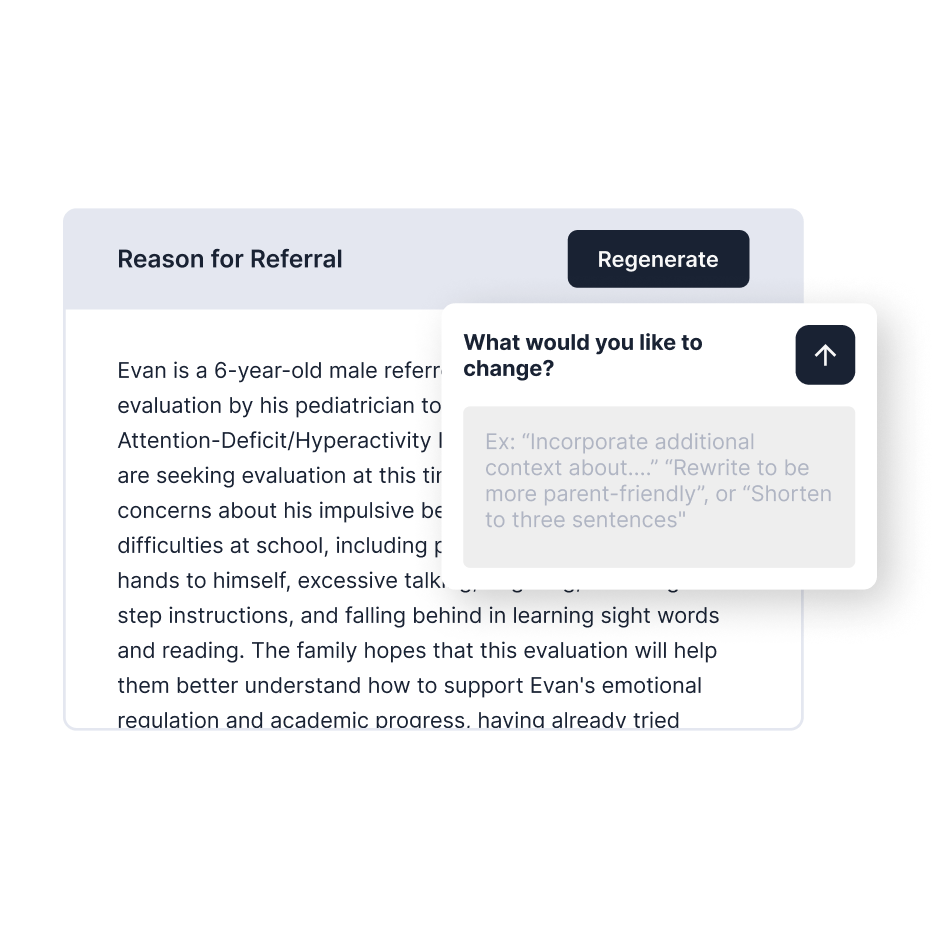
You can also run automated control checks to ensure data accuracy. Plus, you receive evidence-based findings and clear explanations that help support your clinical judgment.
Psynth's software is built for psychologists who want to spend more time on clinical analysis and patient care instead of administrative tasks.
It's not designed to replace the assessment process. It simply helps you write reports faster and with less effort, so you can reclaim your valuable time.
In fact, ever since adopting Psynth, Dr. Molina has transformed her reporting workflow and quality of life. As she puts it, “I haven’t worked a weekend since using Psynth... I really feel like a new person.”
On top of these benefits, Psynth is fully HIPAA-compliant. The platform takes data security seriously by using encrypted AWS services and zero-retention language models. No data is sold, stored, or repurposed.
Signed business associate agreements (BAAs) also guarantee the secure processing, storage, and transmission of sensitive health information.
Try Psynth for free today and spend your time on clinical work, not clerical work!
See Psynth work in real time
We’ll demo an end-to-end report writing process and answer any questions along the way. (Yes, it’s so quick, we can get through it all during a single call.)