
See All
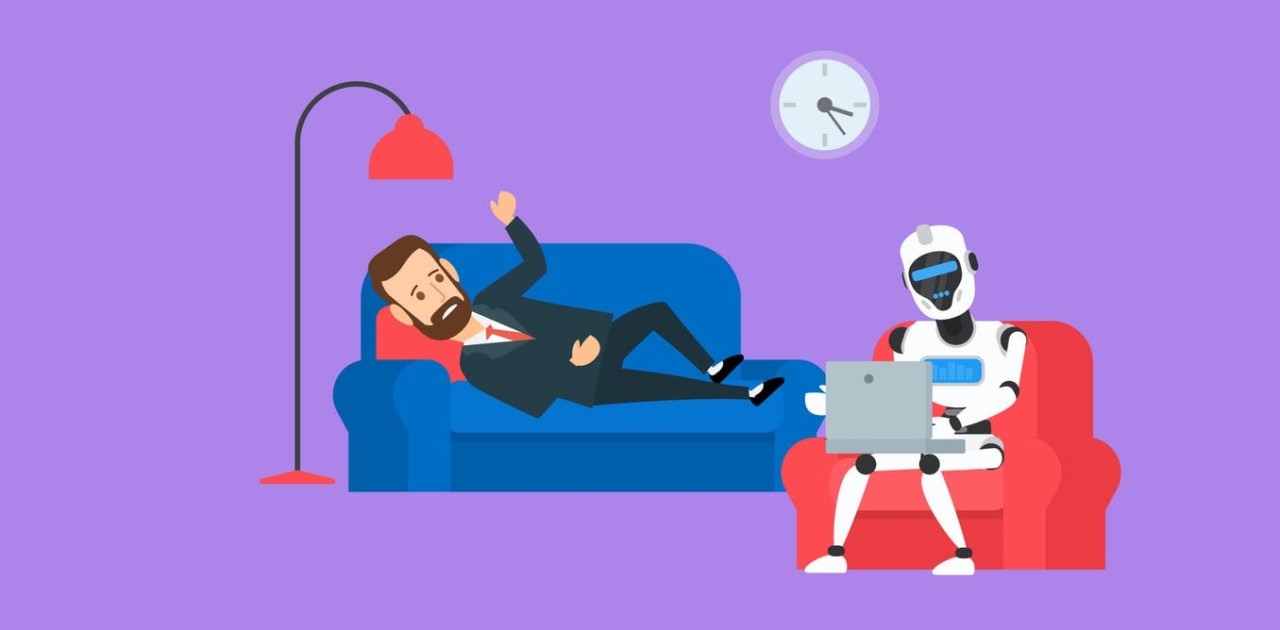
The Guilt of Automating What You Were Trained to Do
Struggling with report writing automation guilt? You're not alone. Discover why this guilt is misplaced and how to use AI tools without compromising your cli...
Author

Reviewed By

Share This
The Guilt of Automating Report Writing
Most psychologists feel a sense of guilt about automating report writing, but few talk about it openly. This isn't really about worries over accuracy. It's a quieter feeling—the sense that if a tool can handle this work, maybe all those years of training weren't as necessary as you believed.
That feeling deserves more than a quick reassurance. It's worth thinking about, because it reveals something important about our training, what we value, and how we see ourselves as professionals. This isn't a question of whether automation is ethical. It's about why it can feel wrong, even when you know it isn't.
What you were actually trained to do
Think back to your practicum. Your supervisor wasn't focused on how you typed. They were interested in how you thought. They wanted to see if you understood why a WISC-V GAI-CPI discrepancy mattered for this specific child, in this family, with this referral question. They watched you integrate information, weigh options, and make decisions.
No one ever told you to be quick at building sentences. No one trained you to format background sections. The real skill you developed over the years is in the interpretive layer: using clinical reasoning to connect a BASC-3 internalizing elevation to what you saw in the room, weighing differences between informants, and making judgment calls when two tools gave different results.
The two jobs inside every report

Report writing in its current form asks you to do two very different things:
- Mechanical production (structured, repeatable work)
- Clinical reasoning (interpretive, judgment-based work)
This is the thinking layer—making sense of the data.
These are two different tasks. We combined them in the past because there wasn't a better option.
"The craft you spent years developing lives in the interpretive layer. Not in the formatting. Not in the sentence construction. In the reasoning."
Part of the guilt around automating report writing comes from mixing up these two very different jobs.
Where the guilt actually comes from
Our professional identity is based on being competent. For most of us, that meant working hard to master our skills during training. You probably struggled with your first neuropsych report or rewrote an ADHD evaluation several times before your supervisor approved it. The challenge was part of the learning process. Research on learning shows that effortful processes can improve retention and mastery, a concept known as “desirable difficulties.”
So when a task that once took four hours now only takes forty-five minutes, it can feel like you've lost something. The work might feel less like your own, as if you've skipped the process that made you feel legitimate. This reaction aligns with cognitive dissonance theory: when effort has historically justified value, reducing that effort can create discomfort about the legitimacy of the outcome
Research shows this pattern is common in many clinical fields when technology changes how skills are practiced. The discomfort isn't just resistance to change. Research on professional identity in healthcare shows that when core tasks are automated or restructured, clinicians often experience this as a threat to identity rather than a simple workflow change. It's a sense of loss for an old idea of mastery.
There's also a more subtle issue. Psychologists are trained to be wary of shortcuts. We know that mental shortcuts can lead to mistakes and that confirmation bias affects how we interpret things. Research over decades shows that relying on cognitive shortcuts can distort judgment systematically. We've spent our careers teaching clients that the best way through a problem is to face it directly. So, when a tool does in minutes what used to take hours, it feels too easy, and we worry something important is being lost.
Sometimes that instinct is correct. But often, when it comes to producing reports, it isn't.
Common sources of automation guilt in psychology
These reactions overlap with well-documented patterns such as perfectionism and impostor phenomenon, both of which are common in high-achieving clinical populations.
Is automation guilt actually protecting something important?
This is the real question. It's not about whether the guilt is rational, but about what it's trying to protect.
In some cases, it's protecting clinical quality. That's worth taking seriously. If you're using any tool, including something like Psynth, and not reviewing the output carefully, not applying your own interpretive judgment to the narrative it generates, then the guilt is warranted. A V1 draft is not a finished report. The clinician is still the author. The interpretive decisions, the diagnostic impressions, the formulation: those don't belong to any tool. They belong to you.
According to the APA Guidelines for Psychological Assessment and Evaluation, the psychologist retains full professional responsibility for the accuracy and appropriateness of any report bearing their name, regardless of what tools were used in its production. That responsibility doesn't shrink when the typing gets faster.
But sometimes, the guilt is protecting something less helpful: an identity built on struggling through the production work. If you find yourself spending four hours on formatting and score descriptions because it feels thorough, it's worth asking if that belief helps your clients or just supports your idea of what rigor should feel like.
What report writing automation guilt is often protecting — and whether it's worth it:
- Clinical quality → Worth protecting. Review every draft carefully.
- Professional responsibility → Worth protecting. You are always the author.
- Suffering through production work → Not worth protecting. That's friction, not rigor.
- An identity built on time spent → Not worth protecting. Time spent is not the same as value delivered.
Does speeding up production compromise the clinical work?
This is the practical side of the guilt, and it deserves a clear answer.

The clinical reasoning in a psychological report lives in a small fraction of the total word count. It lives in the interpretive summary. In the diagnostic impressions. In the way you explain to a parent, or a school, or a referring physician, what these findings mean for this person's life. That section cannot be automated. It shouldn't be. It requires everything you trained for.
The parts that can be handled more efficiently are the basics: demographic background, test descriptions, behavioral observations from your notes, and the score summary. These sections are needed for a full report, but they aren't where your clinical expertise shows.
The PubMed article on ethical considerations in psychological assessment reporting made this distinction clearly even in the early literature on computer-assisted assessment: the concern was never automation of factual reporting; it was the inappropriate substitution of automated text for clinical judgment. Those are different problems. Early literature on computer-assisted assessment clearly distinguished between automating data reporting and substituting clinical judgment, specifically warning against excessive reliance on automated interpretations.
Clinicians who separate clinical judgment from documentation often find that it actually improves their interpretive work. Research on diagnostic reasoning indicates that minimizing unnecessary cognitive load enables clinicians to dedicate more mental resources to complex judgment and interpretation. When you're not worn out from writing paragraphs, you have more energy for the reasoning that really matters.
What automation can and cannot replace
Can be automated without clinical risk:
- Data entry and aggregation
Importing scores, pulling demographic data, and compiling results from multiple sources. - Scoring and basic calculations
Standardized test scoring, norm lookups, percentile ranks, and summary statistics. - Template-based report sections
Background info, test descriptions, and boilerplate language that does not require interpretation.
- Formatting and document structure
Applying headings, consistent layout, pagination, and style guidelines. - Grammar, spelling, and clarity edits
Surface-level language improvements that do not alter meaning. - Transcription and summarization (low-stakes content)
Converting interviews or notes into draft summaries—with human review. - Scheduling and workflow management
Tracking deadlines, routing reports for review, and managing version control. - Data visualization
Generating charts or tables to display results (without interpreting them)
Cannot and should not be automated:
- Clinical interpretation of results
Determining meaning, patterns, and diagnoses requires professional judgment. - Diagnostic decision-making
Assigning labels or conditions carries ethical, legal, and clinical risk. - Case conceptualization
Integrating history, context, and test data into a coherent understanding of the individual. - Risk assessment (e.g., suicidality, violence)
High-stakes judgments must remain clinician-led. - Individualized recommendations
Tailoring interventions or treatment plans to a specific person. - Resolving conflicting or ambiguous data
Requires nuanced reasoning and contextual awareness. - Cultural and contextual interpretation
Understanding how background factors influence results. - Final report sign-off
Responsibility cannot be delegated—consistent with guidance from the American Psychological Association.
Key Takeaway: Automation helps with the production side of report writing, but it doesn't affect the interpretive part. These are separate tasks, and only the interpretive work needs your clinical license.
Understanding the ethical boundaries of report writing automation guilt
Many psychologists feel report writing automation guilt not only as a question of professional identity, but also as a real ethical concern: Am I still the author if a tool created the basic structure?
According to current professional standards, the answer is yes, as long as you review, revise, and take full responsibility for the final report.
What professional guidelines actually say
The American Psychological Association’s position on technology-assisted assessment is grounded in a clear principle: the psychologist is responsible for the output, full stop. This means:
This means:
- The clinician—not the tool—is accountable for the accuracy, validity, and appropriateness of any report produced.
- Technology can assist, but it cannot replace professional judgment.
- All outputs must be critically reviewed, interpreted, and, if necessary, corrected before being finalized.
- Psychologists must ensure that any tools used are fit for purpose, evidence-based, and appropriate for the population being assessed.
- There must be transparency about how conclusions are derived, especially when automated or AI-assisted processes are involved.
- Confidentiality, data security, and informed consent remain non-delegable responsibilities, regardless of the technology used.
- Psychologists are expected to maintain competence with the tools they use, including understanding their limitations and risks.
This framework doesn't ban automation. Instead, it sets the rules for when automation is ethical. If your guilt about automating report writing makes you review drafts carefully, that's what professional standards want. But if it makes you avoid helpful tools, and that hurts your wellbeing or limits client access, it's worth looking at that more closely.
The ethical question isn't whether a tool helped draft the report. It's whether a licensed clinician reviewed, interpreted, and took full responsibility for it. If so, the ethics are sound.
How to evaluate an AI report writing tool responsibly
If you're moving past the guilt and into practical decision-making, the evaluation criteria matter. Not all tools are built the same way, and the differences are clinically significant. Research on adoption indicates that perceived usefulness and ease of use are strong predictors of whether clinicians will integrate new tools into their practice.
Questions to ask before adopting any report writing tool:
- What problem are we trying to solve with this tool?
- Who will use it, and what types of reports do they create?
- Can it enforce templates, formatting, and consistency?
- Does it integrate with our existing systems and data sources?
- Does it support collaboration (editing, comments, approvals)?
- Can workflows be customized (e.g., draft → review → publish)?
- Does it meet compliance requirements (e.g., HIPAA, GDPR)?
- How does it protect sensitive data (security, encryption, access control)?
- How accurate and reliable are the outputs (especially if AI is involved)?
- Is there traceability back to the source data?
- How easy is it to learn and use?
- What training and support are available?
- Can it be customized as our needs evolve?
- Will it scale with more users and a higher volume of reports?
- What is the total cost (licenses, setup, maintenance)?
- What return on investment can we expect (time saved, fewer errors)?
- Is the vendor stable and responsive?
- Can we easily export our data if we decide to switch tools later?
- Does it introduce any ethical risks (e.g., over-reliance on AI)?
- Can we test it with a pilot program before fully adopting it?
What happens to the hours you get back
This is the part that often changes minds for skeptical practitioners. If automating production work reduced your report time from four hours to one, how would you use those extra three hours?
Most psychologists trying to prevent burnout don't say they would just see more clients. Instead, they say they'd have time to think through complex cases, call back a referring provider, or leave work before 7 PM. They could finally do the things that time management advice promises, but that heavy documentation usually prevents.
There's an irony in report writing automation guilt. The skills that guilt tries to protect—clinical expertise, interpretive skill, and the ability to create a meaningful formulation—can actually weaken when you're worn out by too much documentation. If you spend twelve hours a week on reports, your clinical reasoning at hour eleven isn't as strong as it was at hour two.
"The training the guilt is protecting? It atrophies under documentation fatigue. Efficiency isn't the enemy of rigor. Exhaustion is."
Research on clinician burnout shows that excessive documentation burden is associated with reduced cognitive capacity, lower job satisfaction, and increased error risk.
Key Takeaway: The skills that automation can't replace—clinical judgment, formulation, and interpretation—are the very ones that suffer from too much documentation. Sometimes, protecting those skills means automating the tasks around them.
How report writing automation guilt shows up differently by practice type
Report writing automation guilt is not one-size-fits-all. It manifests differently depending on how and where you practice.
Solo private practice
Clinicians in solo practice often have the most paperwork and the least help. In this setting, guilt often mixes with financial pressure. Taking longer on reports can feel easier to justify when you bill per evaluation. There's a worry that being efficient will look like cutting corners, even if that's not true.
Group practice and hospital settings
In larger settings, the guilt often looks different. There may be worries about keeping things consistent across clinicians, or concerns that supervisors or peers will be skeptical about using AI tools. The social side of this guilt can be just as strong as the personal side.
Trainees and early-career psychologists
For psychologists still in supervised practice, report-writing automation guilt can feel strongest. If struggling with reports was part of showing your competence, using a tool might seem like it takes away your supervisor's way to see your progress. It's important to talk about this openly in supervision.
Experienced clinicians with established workflows
In this case, the guilt is often quieter but more deeply rooted. A workflow built over fifteen years becomes part of your identity. Changing it, even for the better, can feel like betraying the clinician you've worked hard to become.
How report writing automation guilt resolves over time
Based on what clinicians consistently report after integrating AI-assisted tools into their workflows, the guilt tends to follow a predictable arc. This pattern reflects classic diffusion-of-innovation models, where initial resistance transitions to gradual normalization as users incorporate new tools into their workflows. This process doesn't happen on its own. It takes a conscious effort to notice what the tool is handling and what you are still responsible for.
Report writing automation guilt and professional identity: the longer view
Addressing report writing automation guilt with honesty, not avoidance
Feeling guilty about automating report writing is a normal response to a real conflict. It shows you care about professional standards and take responsibility for your work. These are not things you should try to talk yourself out of.
But that guilt should lead you to review drafts more carefully, not avoid using helpful tools. The responsibility your guilt points to—toward your clients, the accuracy of your reports, and your professional integrity—doesn't go away when the typing gets easier. It just shifts from the keyboard to your clinical judgment as you review what was drafted.
The psychologists who manage this well aren't the ones who have eliminated the tension. They're the ones who acknowledge it honestly. They use better tools, review carefully, take ownership of the final product, and use the extra time for the clinical work they trained to do.
Tools like Psynth are designed with this approach in mind. The clinician remains in full control of the interpretive narrative, and your assessment skills shape the final report. The production scaffolding is automated, but the judgment stays with you.
This isn't about taking shortcuts. It's about dividing the work in a smarter way.
It may help to know that psychologists nationwide are using Psynth to reduce report writing time and are using those saved hours for the clinical work they trained for. If you've been feeling report writing automation guilt and wonder if it's holding you back, trying a free 14-day trial is a simple way to see for yourself.
Frequently Asked Questions
Can I see my psychologist's notes?
Clients can usually access their official records, such as progress notes, but not private process notes. Psychologists may withhold notes that could cause harm or violate mandatory reporting laws. Access depends on clinic policy, documentation type, and legal requirements within your state or country.
What technology do psychologists use?
Psychologists use a combination of practice management software, diagnostic solutions, and telepsychology platforms. These systems handle tasks like scheduling, billing, report writing, and patient communication, which improves operational efficiency within a modern psychology practice.
What tools do clinical psychologists use?
Clinical psychologists use digital software, psychological tests, interview methods, and evidence-based interventions to support assessment and treatment processes. These tools help organize information, track progress, and improve the client's mental well-being.
How to make AI HIPAA compliant?
AI systems become HIPAA compliant when designed with clear safeguards for patient privacy and data integrity. HIPAA compliance depends on encryption, audit trails, and strict role-based access controls. Vendors must complete regular audits and sign a BAA confirming shared responsibility for PHI security.
See Psynth work in real time
We’ll demo an end-to-end report writing process and answer any questions along the way. (Yes, it’s so quick, we can get through it all during a single call.)