

Psychoeducational Evaluations: What to Include So Schools Actually Use Your Recommendations
What is a psychoeducational evaluation? What to include, how it fits IDEA, IEPs and 504 plans, and how to write recommendations schools act on.


A psychoeducational evaluation is a comprehensive assessment of how a student learns, combining cognitive, academic, social-emotional, and behavioral measures with history and observation to explain why a student is struggling and what will help. Schools use it to determine eligibility for special education under IDEA or supports under Section 504, and they act on recommendations tied to specific findings, written in plain language and realistic for the classroom.
The back-to-school rush is when that last part gets tested. Referrals stack up in September and October, IEP meetings follow, and a report that took a week to write can end up being read in the ten minutes before the team sits down. This guide covers what a psychoeducational evaluation should include, how it fits the legal framework schools work inside, and how to write recommendations and parent summaries that make it off the page.
What Is a Psychoeducational Evaluation?
A psychoeducational evaluation answers an educational question: does this student have a disability that affects learning, and what does the student need to succeed in school? A school psychologist usually completes it as part of a school team evaluation, or a licensed psychologist in private practice when a family seeks an outside opinion.
It overlaps with, but is not the same as, a neuropsychological evaluation. A neuropsychological evaluation connects thinking skills to how the brain is working, often because of a medical or neurological condition. We break down that distinction with a comparison table and a script for families: neuropsychological vs. psychological testing.
The scale is large. According to the National Center for Education Statistics, 7.5 million students ages 3 to 21 received special education or related services under IDEA in 2022-23, or 15 percent of all public school students. Specific learning disabilities were the most common category, at 32 percent.

How Psychoeducational Evaluations Fit IDEA, IEPs and 504 Plans
Knowing the rules the school team works under changes how you write. The key points, from the IDEA regulations at 34 CFR Part 300 and the Section 504 regulations at 34 CFR Part 104:
- Who can ask. Either a parent or the school can request an initial evaluation (34 CFR 300.301(b)). For the family, it is free of charge.
- The clock. The initial evaluation must be completed within 60 days of parental consent, or within the state's timeframe if it sets one (34 CFR 300.301(c)).
- No single measure. The school must "use a variety of assessment tools and strategies" and may "not use any single measure or assessment as the sole criterion" for eligibility. The evaluation must be "sufficiently comprehensive to identify all of the child's special education and related services needs" (300.304).
- Who decides. "A group of qualified professionals and the parent" determines eligibility, and the parent gets a copy of the evaluation report at no cost (300.306).
- Where the report goes next. The IEP team must consider "the results of the initial or most recent evaluation of the child" when developing the IEP (300.324).
- Reevaluation. At least once every 3 years, and not more than once a year, unless the parent and school agree otherwise (300.303).
Section 504 works differently. It covers a student with "a physical or mental impairment which substantially limits one or more major life activities" (34 CFR 104.3(j)), a broader definition than IDEA's disability categories. A 504 evaluation must draw on "information from a variety of sources," and a group that includes people who understand "the meaning of the evaluation data" makes placement decisions (34 CFR 104.35). The U.S. Department of Education's Office for Civil Rights explains both in its Parent and Educator Resource Guide to Section 504.
The takeaway for report writers: the team is required to consider your findings, but a group decides. Your report has to make that group's job easy.
What Should a Psychoeducational Evaluation Include?
Report structure varies by setting, but the core is consistent. A NASP-affiliated guide for school administrators by Andrea Canter, "Psychological Evaluations: What Every Principal Should Know" (Principal Leadership, 2003), lists what every evaluation report should contain. In summary:
1. Reason for referral. The specific question the evaluation answers.
2. Relevant background. School, developmental, health, and service history, plus prior evaluations.
3. Procedures used. Every measure, observation, interview, and record reviewed.
4. Limitations. Anything that affects validity, such as language proficiency, cultural factors, or nonstandard administration.
5. Results. Findings across measures, tied back to the referral question.
6. Integration. What the results mean together, and alongside data from other team members.
7. Answers to the referral question. Stated directly.
8. Recommendations. Relevant to the referral question and, in Canter's words, "relevant to, and feasible within, the school system."
For a typical referral, the measures might include a cognitive battery such as the WISC-V, an achievement battery such as the WIAT-4, rating scales such as the BASC-3 or Conners-4, and classroom observation. If ADHD is part of the question, the way you write up rating scales matters; see what a Conners-4 interpretation should say in a report.
Why Schools Skip Past Recommendations
Most readers of a psychoeducational evaluation report never read the whole thing. In a 2023 Psychology in the Schools survey of 349 general and special education teachers and administrators, Hale and Brown-Chidsey found that about one-third typically read the entire report. The summary and recommendations were the most-read sections, and they preferred shorter reports, bullet points, and visual summaries (Hale & Brown-Chidsey, 2023).
The people reading are stretched thin. NASP recommends one school psychologist for every 500 students; the national ratio for 2024-25 was 1,071 to 1. When the team is that busy, the summary and recommendations are the report.
How to Write Recommendations Schools Can Act On
A recommendation gets implemented when a teacher can read it and know what to do on Monday. A checklist:
- Tie every recommendation to a finding. If you can't point to the data that supports it, cut it.
- Name the setting and the person. Classroom teacher, special education teacher, related service provider, or family.
- Be specific about frequency and format. "Extended time" is vague. "Time and a half on tests and quizzes longer than 20 minutes, in a separate setting" is actionable.
- Separate the types. Group recommendations under accommodations, instruction or services, and home so that the team can map them onto the IEP or 504 plan.
- Prioritize. Put the three to five that matter most first. A list of 30 tells the team nothing about which ones to start with.
- Keep them realistic. Recommend what a school can deliver.
Before (fictional example): "Student would benefit from multisensory reading instruction and accommodations for slow processing speed."
After: "Reading (decoding, Word Reading standard score in the low range): Provide explicit, systematic phonics instruction in a small group, at least 30 minutes daily. Processing speed (Processing Speed Index in the low range): Allow time and a half on timed assessments; provide copies of class notes so the student can focus on listening."
The second version shows the finding, the setting, and the dose. It does not make the reader guess.
Writing a Parent-Friendly Summary
Parents receive a copy of the evaluation report, and they help decide eligibility. A one-page summary at the front, written in plain language, does more for the parent than any other section. Include:
- The question, in their words. "You asked why reading homework takes Sam two hours."
- What we found, in three to five sentences. Strengths first, then areas of need.
- What the scores mean. One line on percentile ranks ("scored higher than about 16 out of 100 students the same age") instead of a table.
- What happens next. The eligibility meeting, the IEP or 504 plan, and the three recommendations that matter most.
- Their rights. Parents who disagree with a school's evaluation can request an independent educational evaluation at public expense (34 CFR 300.502).
We go deeper on plain-language reporting in how to write psychological reports that actually get read.
For Private Evaluators: Getting the School Team to Use Your Report
If a family brings your psychoeducational evaluation to the school, IDEA says the results "must be considered by the public agency, if it meets agency criteria, in any decision made with respect to the provision of FAPE" (300.502(c)). Considered is not the same as adopted. To give your report the best chance:
- Use the school's language (eligibility categories, accommodations, specially designed instruction) instead of clinic-only terms.
- Address the eligibility criteria the team has to document, not just the diagnosis.
- Keep recommendations within what a public school can reasonably provide.
- Offer to join the meeting or send a summary for the team.
Writing the Report Without Losing Your Evenings
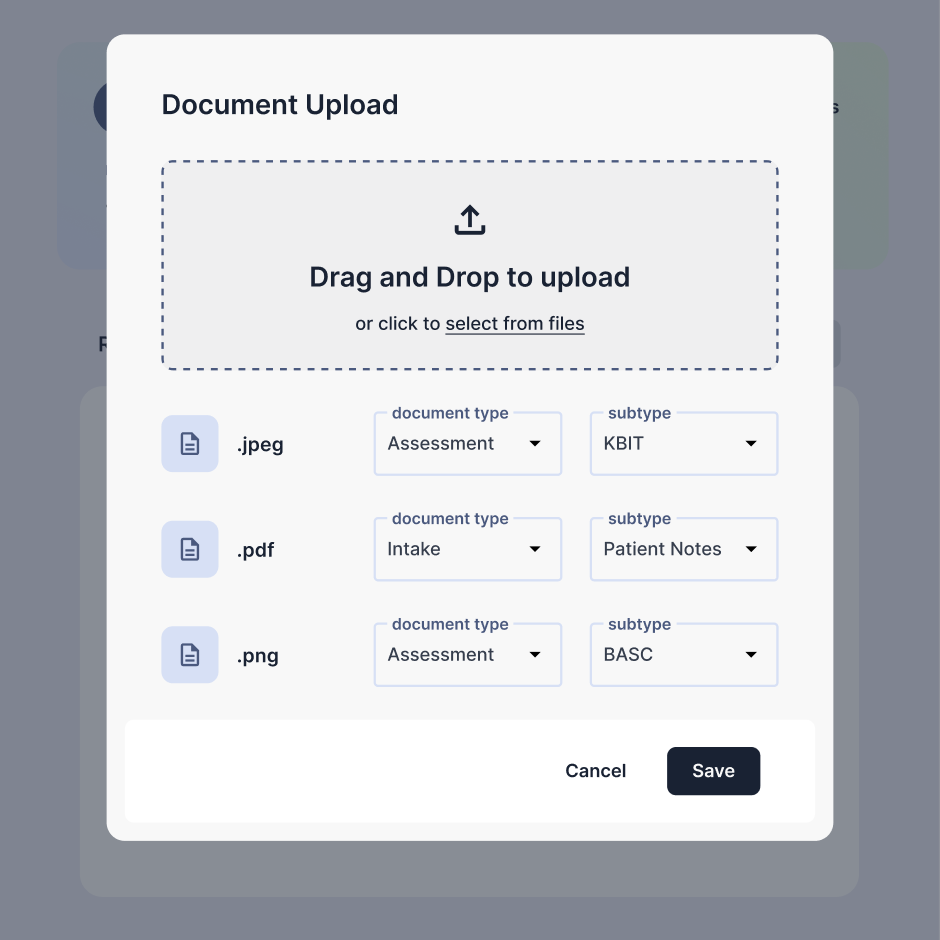
Psychoeducational reports are long, and the fall referral wave makes them longer. Psynth turns your notes, uploaded records, and test scores into a structured first draft, and its ambient listening feature captures structured information from parent and student interviews as they happen. You edit, you make every clinical decision, and you sign. Dr. Lexie Molina hasn't worked a weekend since she started using it. School psychologists looking at tools can also read our guide to what school psychologists use for AI reports, or see the Psynth features page.
Try Psynth Free
Spend your time on recommendations the team will use, not on formatting. Try Psynth free.
Frequently Asked Questions
What is a psychoeducational evaluation?
It is a comprehensive assessment of a student's cognitive, academic, social-emotional, and behavioral functioning, used to explain learning difficulties, determine eligibility for special education or 504 supports, and guide instruction and accommodations.
What does a psychoeducational evaluation include?
Typically, a reason for referral, background history, the procedures used, any limitations, results, an integrated interpretation, direct answers to the referral question, and recommendations. Measures often include cognitive and achievement testing, rating scales, observation, and interviews.
Who can do a psychoeducational evaluation?
In schools, usually a school psychologist as part of a team. In private practice, a licensed psychologist. State rules set who is qualified to conduct each part.
Does a school have to accept a private psychoeducational evaluation?
Under IDEA, the school must consider a private evaluation a parent shares, if it meets agency criteria, in decisions about the student's education. It does not have to adopt every finding or recommendation.
How often are students reevaluated under IDEA?
At least once every three years and no more than once a year, unless the parent and school agree otherwise.
Is a psychoeducational evaluation the same as a neuropsychological evaluation?
No. A neuropsychological evaluation looks more closely at brain-behavior relationships, often because of a medical or neurological condition. See our comparison of neuropsychological vs. psychological testing.