See All

How to Write Psychological Reports That Actually Get Read
Psychological reports are legal documents, clinical arguments, and the thing parents read at 11pm. Here's what goes in them and how to make them work for eve...
Author

Reviewed By
Share This
Understanding Psychological Reports: Structure and Content
When you finish scoring the WISC-V, the BASC-3, the BRIEF-2, and have the Conners-4 data in front of you, the real challenge begins—translating all that clinical data into psychological reports that actually communicate. Psychological reports don't have a universal format enforced by anyone, which sounds like freedom but mostly just creates inconsistency, especially when you're supervising other clinicians or onboarding someone new. So here's what actually goes in one, and why each piece matters.
What Psychological Reports Actually Are
Look, the short answer: psychological reports are documents that translate what you did in an assessment into something a school, a parent, a treatment team, or a court can use. Not a data dump. Not a test score rundown. A clinical argument, and it reads like one.
The APA Guidelines for Psychological Assessment (apa.org/about/policy/guidelines-assessment-health-service.pdf) are pretty clear that psychological reports need to reflect individualized clinical judgment tied to the specific referral question. Sounds obvious. In practice it means the report on a 9-year-old with a reading concern looks genuinely different from the one on a 45-year-old being evaluated for a mood disorder, even when you pulled from the same instrument set.
The purpose of the report shapes everything. Before you write a word, be clear on three things: who ordered this, what question they're trying to answer, and who's actually going to read it. A neuropsychological report going to a specialist team can carry clinical shorthand. One going to a parent or an IEP meeting probably needs more translation.
Key Takeaway - Psychological reports are clinical arguments, not data summaries. The referral question should drive every section.
Standard Sections in Psychological Reports and What They Do
There's no single mandatory template, but most psychological reports that hold up clinically tend to hit the same beats. This is what I'd call the baseline structure for psychological reports.
Identifying Information and Reason for Referral. Who the client is, who sent them, why. Keep it tight. The referral question deserves a full sentence because it anchors the rest of the report. Every section you write after this is answering it.
Background and History. Developmental, medical, family, educational, psychiatric, depending on what's relevant. This is where clinical judgment starts. You're not transcribing intake notes, you're selecting what matters for the question at hand.
Behavioral Observations. What you actually saw. Validity indicators, rapport, effort, anything that affects how you interpret the data. This section is undervalued and often rushed, which is a mistake, because it's the context the numbers live in.
Assessment Methods. List what you used. Interviews, records reviewed, instruments administered. No scores here yet, just the methods.
Test Results and Interpretation. This is the section most of us find the hardest to write efficiently. Scores across instruments don't always point in the same direction, and you have to make sense of that in prose a non-psychologist can follow. A 2004 PubMed review on what makes psychological reports actually work (pubmed.ncbi.nlm.nih.gov/16273516/) found that the ones that land well address the referral question head-on, pitch the data at the right level for the reader, and close with recommendations that mean something. Plenty of psychological reports fail all three, honestly.
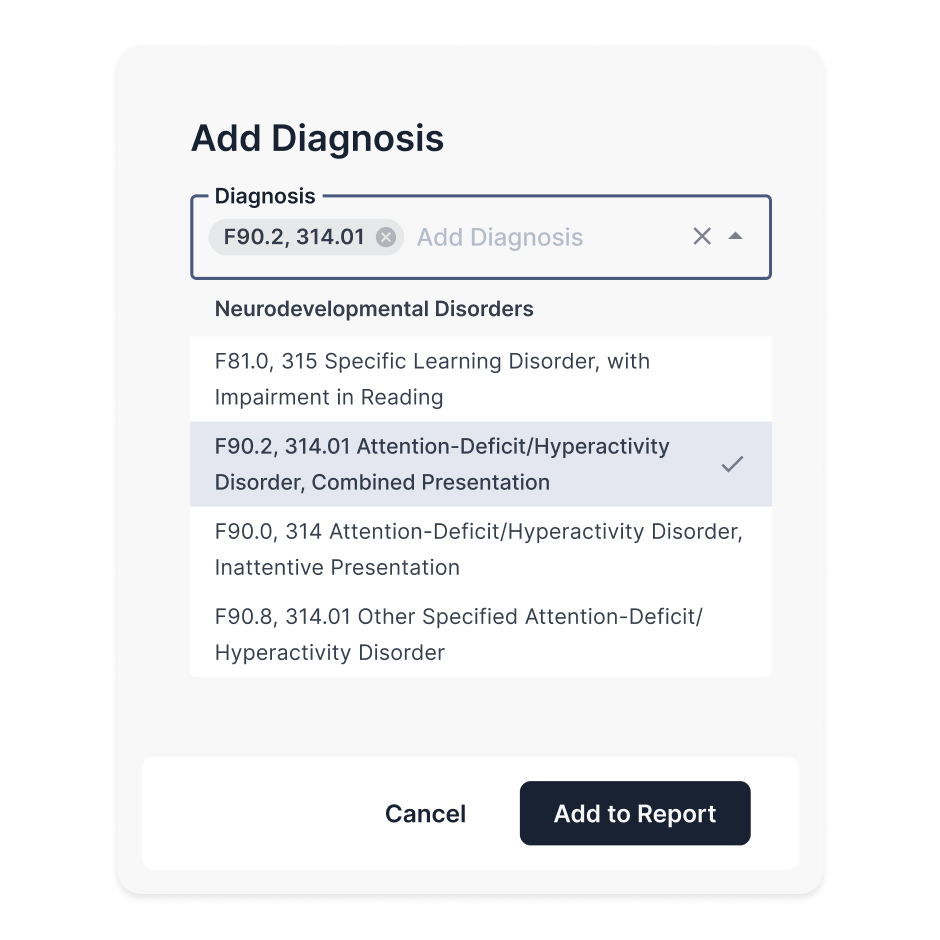
Clinical Impressions and Diagnostic Formulation. What you think is going on. Diagnoses if applicable, caveats where warranted. This is where your interpretive narrative has to do real work.
Recommendations. Specific, actionable, and prioritized. "Therapy is recommended" is not a recommendation. "Weekly individual therapy targeting executive function deficits with a CBT-informed approach" is closer.
▶ Sunday Coffee w/ Dr. Childress: Clincal Psychology Report Format
Readability Best Practices for Psychological Reports
Nobody taught us this in grad school: a psychological report isn't done when it's accurate. It's done when the right person reads it and knows what to do next. Those are different targets.
Psychological reports tend to fall apart for the same handful of reasons. Too long because the writer couldn't cut. Reading level too high for the actual audience. Clinical impression buried in the middle instead of organizing the whole thing.
Common Readability Problems
A separate piece in PubMed on psychological report controversies (pubmed.ncbi.nlm.nih.gov/16273513/) gets into this directly, including debates about length, whether to include raw scores, how to present client strengths alongside deficits. Not new debates. Still relevant, because different referral sources have genuinely different needs and there's no universal fix.
Key readability issues in psychological reports include:
Writing for Your Audience
Practically speaking: write for the least specialized reader who will see this document. Plain language where you can get away with it. Want to use a technical term? Make sure the surrounding sentences earn it. And write the recommendations like you actually want someone to act on them.
"The single biggest readability problem I see in reports from newer clinicians is that the recommendations section doesn't match the interpretive section. You read the whole thing and then the recs feel like they came from a different document."
Ethical and Legal Considerations When Writing Psychological Reports
Psychological reports get subpoenaed. They get shared with schools, pediatricians, attorneys, employers. They live in files for decades. The move isn't to freeze up about that, it's to write precisely because of it.
The PubMed research on ethical considerations in psychological assessment reports (pubmed.ncbi.nlm.nih.gov/16273511/) covers the real landmines: confidentiality, data release, diagnostic labeling and its downstream effects, the tension between clinical honesty and client welfare. Worth a read if you haven't gotten to it.

Documentation Standards and Defensibility
On the documentation side, NASP's Practice Model Implementation Guide emphasizes that documentation needs to be consistent with professional standards and defensible. That matters especially if you're running a practice where multiple clinicians are producing psychological reports with different formats and different levels of specificity.
Consistency matters because:
Defensibility in a legal context goes up when formats are standardized. Oversight gets easier. Quality control becomes something you can actually measure. And the liability exposure that comes from inconsistent psychological reports across a practice is a real problem, not just an aesthetics one.
Clinical Documentation Backlog: Not a Discipline Problem is where a lot of practice owners start losing track. Inconsistency across clinicians isn't just an aesthetics problem, it's an ethics and liability problem.
Key Takeaway - Psychological reports are legal documents. Precision, defensibility, and consistency across your practice aren't optional.
Overcoming the Blank Page: Making Report Writing Efficient
I'll admit the reason most of us fall behind on psychological reports isn't that we don't know what goes in them. It's the blank page. You've done the clinical work, you've held the complexity in your head across multiple sessions, and now you have to translate all of it into a structured document, usually at the end of a day when your working memory is shot.
The Cognitive Load Problem
That's exactly the use case Psynth was built for. It takes your scored data and generates a V1 report with the interpretive narrative already drafted, instrument-aware, sections organized, Clinical Voice maintained, so you're editing and refining instead of generating from scratch. Clinicians I know who've started using it, including practices running high-volume psychoeducational caseloads, talk about getting that first draft of psychological reports down in a fraction of the time.
How Cognitive Load Destroys Assessment Scoring Accuracy and the synthesis that follows it is where cognitive fatigue hits hardest. Having a structured starting point changes that.
Making Psychological Reports Your Most Impactful Clinical Work
Somewhere along the way a lot of us got the message that the assessment is the real work and the report is just documentation. That's backwards. Psychological reports are where the clinical thinking becomes useful to anyone other than you. It's what the parent reads at 11pm trying to understand what's happening with their kid. It's what the IEP team uses to decide what support to put in place. It deserves the same care as the assessment itself.
The structure, clarity, and precision you bring to psychological reports determines whether your assessment findings actually change outcomes. That's not just documentation—that's impact.
If you want to see what a structured first draft looks like before you've committed a single evening to it, Psynth's free trial is a low-friction way to try it on a real report.
Frequently Asked Questions
Can you use ChatGPT as a therapist?
No. ChatGPT cannot replace a licensed therapist or provide professional therapy. It can assist with general information or organization. However, it should never be used as a substitute for clinical judgment, ethical care, or professional training in a psychology practice.
Is a BAA the same as HIPAA compliance?
No. A BAA is a contract stating a vendor agrees to comply with HIPAA. It does not verify that the vendor has implemented the required safeguards. Third-party verification through an accredited auditor confirms that actual controls are in place.
How to take notes as a psychologist?
Write notes after each session while you can still remember all the details. Focus on client statements, behaviors, and interventions used. Keep the tone professional and factual. Following structured templates like SOAP or DAP helps maintain consistency and meet your ethical responsibility to record accurate, confidential information. You can also use AI-powered software to automate note-taking and report generation. These tools save valuable time, allowing you to focus on patient care and clinical analysis.
How to make AI HIPAA compliant?
AI systems become HIPAA compliant when designed with clear safeguards for patient privacy and data integrity. HIPAA compliance depends on encryption, audit trails, and strict role-based access controls. Vendors must complete regular audits and sign a BAA confirming shared responsibility for PHI security.
What are psychology notes?
Psychology notes are written records of client sessions, including behaviors, progress, and treatment goals. These notes also help psychologists plan care, track improvement, and maintain legal compliance across every stage of therapy.
How do I start using Psynth?
Start a free trial directly in the Psynth app, then email support@psynth.ai to redeem the AU and NZ pricing offer.
See Psynth work in real time
We’ll demo an end-to-end report writing process and answer any questions along the way. (Yes, it’s so quick, we can get through it all during a single call.)

.jpeg)